
Water moving quiet
This is a boiler with clean copper and iron, a working expansion tank, and a pressure gauge holding steady. Water circulates through the system without catching anywhere, so there's nothing for steam to get trapped against.
Matched to your boiler job
That banging usually means trapped water hitting steam, or air caught somewhere in the lines. Below are the common reasons a boiler does this and what tends to cause each one. A Montana contractor who works on these systems all winter can take a look and tell you which one is going on in yours.
Get matchedThat banging is usually kettling. Mineral scale builds up on the inside of the heat exchanger, and that layer traps a thin pocket of water against the hot metal. The water flashes to steam, collapses back with a bang, and does it again until the burner shuts off. Hard water makes this build faster, but even without it, scale collects over years of heating. Montana winters run long and cold, so a boiler here fires often from fall through spring, and that extra runtime gives scale more chances to settle in. Banging can also come from air trapped in the pipes or a loose baffle knocking around inside the exchanger. None of these fix themselves, and scale in particular gets worse each winter it sits. Left alone, it stresses the heat exchanger and can shorten its life. A contractor can flush the system, bleed the air, or find the loose part, depending on what's actually making the noise in your boiler.




You've noticed the banging isn't constant. It starts up loud right as the burner fires and the boiler starts heating, then it quiets down once things settle. That timing feels important, and it is. Knowing why it lines up with the burner cycle tells you something about what's actually going on inside the heat exchanger.
Kettling only happens when the burner is firing and the heat exchanger is hot. The scale layer traps water against the metal, and that water needs the burner's heat to flash into steam. Once the burner shuts off and the metal cools, there's no more steam forming, so the banging stops. That's why it sounds worst in the first few minutes of a cycle, right when the exchanger is hottest and working hardest. Through a Montana winter, a boiler can fire dozens of times a day, and each firing is another chance for that trapped water to bang. A contractor who services boilers through the cold months here can check how thick that scale has gotten and whether the heat exchanger still has life left in it.
Scale builds up on the inside of the heat exchanger over time.
That layer traps a thin pocket of water against the hot metal.
Trapped water flashes into steam faster than it can escape.
The steam pocket collapses back into water with a bang.




The pro who reaches out is licensed in Montana.
Asking costs nothing, and the choice to hire stays yours.
A lot of Montana's water supply runs hard, and hard water is what builds scale in the first place. Every gallon that passes through your boiler leaves behind a little more mineral deposit on the heat exchanger. In a softer water area that buildup takes years longer to amount to anything. Here it can get there faster, especially in a boiler that's been running the same water through it winter after winter without ever getting flushed. That's worth knowing if you've lived in the house a long time and this is the first winter you've heard the banging.
Gas heat is what most homes here use, and winters in Montana ask a lot of it. A boiler that fires for long stretches, day after day through a Montana winter, is moving a lot more water past that scale layer than one that only kicks on now and then. More cycles means more chances for a pocket of water to get trapped and flash to steam. That's part of why the banging tends to show up or get louder once the cold really sets in, even if the scale itself has been building for longer than this one season.
At 15°F overnight, your boiler is firing often through December, January and February. That's a lot of cycles for scale to build up on the heat exchanger, and more cycles means more chances for that banging to start.
NOAA nClimDiv 1991-2020 county normals weighted by homes
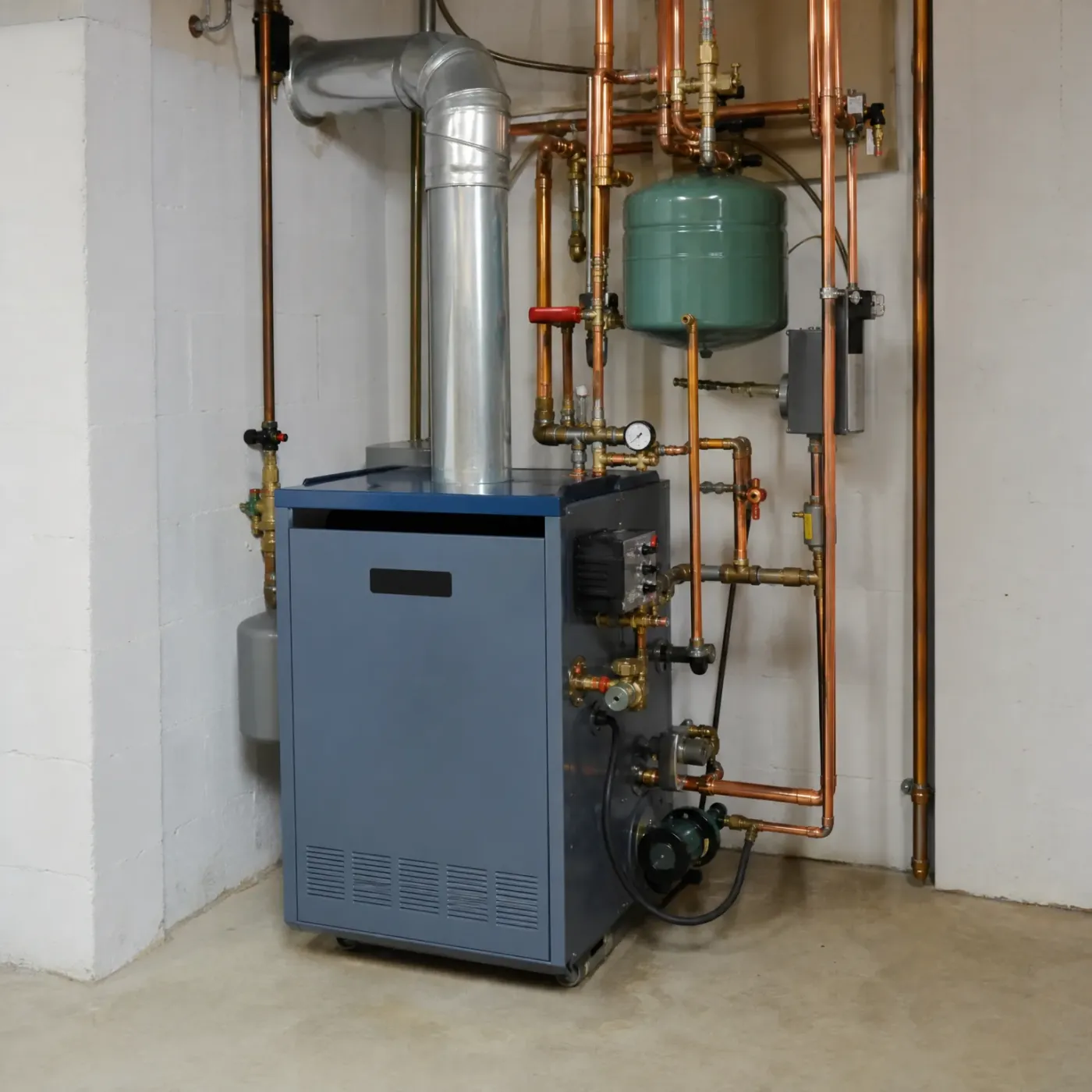
This is a boiler with clean copper and iron, a working expansion tank, and a pressure gauge holding steady. Water circulates through the system without catching anywhere, so there's nothing for steam to get trapped against.
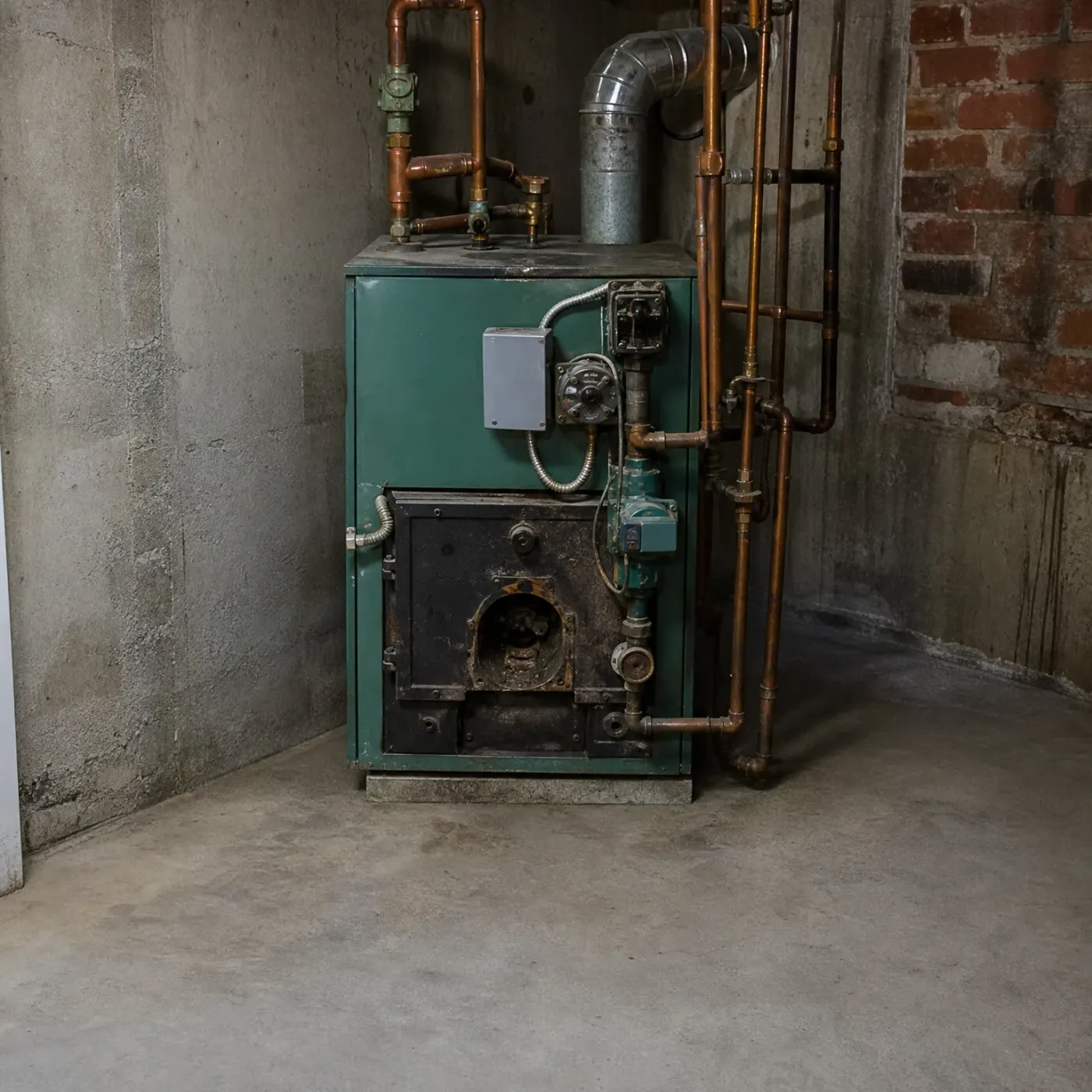
Corrosion like this on the firebox door usually comes with scale built up where you can't see it, inside the heat exchanger. That's where the banging starts, and a boiler in this shape is past the point where cleaning alone fixes it.

Scale built up inside the heat exchanger, water got trapped against hot metal, and that's the sound you're hearing. It won't fix itself, and it won't go quiet on its own once the burner's been firing all winter at 15°F. The scale that caused it came from Montana's hard water, and it's been collecting for a while.
Someone who services boilers in Montana through the cold months has seen this exact pattern before, on systems like yours, and knows where to look first. Submit your information and you'll be matched with one licensed local contractor, not several companies competing for your call, just the one who takes a look and tells you what's actually going on inside that heat exchanger.


A local pro for your boiler repair



