Why your boiler is kettling in Montana

Step 1 of 3: Equipment

Why is my boiler making a kettle noise?

That rumbling, popping sound coming from your boiler usually catches people off guard the first time they hear it, especially late in the evening when the house is quiet and the furnace or boiler is the only thing running. It sounds like something is about to break. Before you shut it off and start worrying about a repair bill, it helps to know what causes that noise and what it means for the system you've got.

It's called kettling, and it means scale or sediment is building up on the heat exchanger

The popping and rumbling happens when mineral deposits or sludge coat the inside of the heat exchanger. Water trapped under that layer boils and turns to steam before the rest of the water around it heats up, and the steam bubbles collapsing make the kettle sound. It's not dangerous in the short term, but it means the boiler is working harder to heat the same amount of water, and that buildup only gets thicker over time. With gas heat common across Montana and winters that lean hard on the boiler for months at a stretch, a kettling boiler left alone tends to get louder and less efficient as the season goes on.

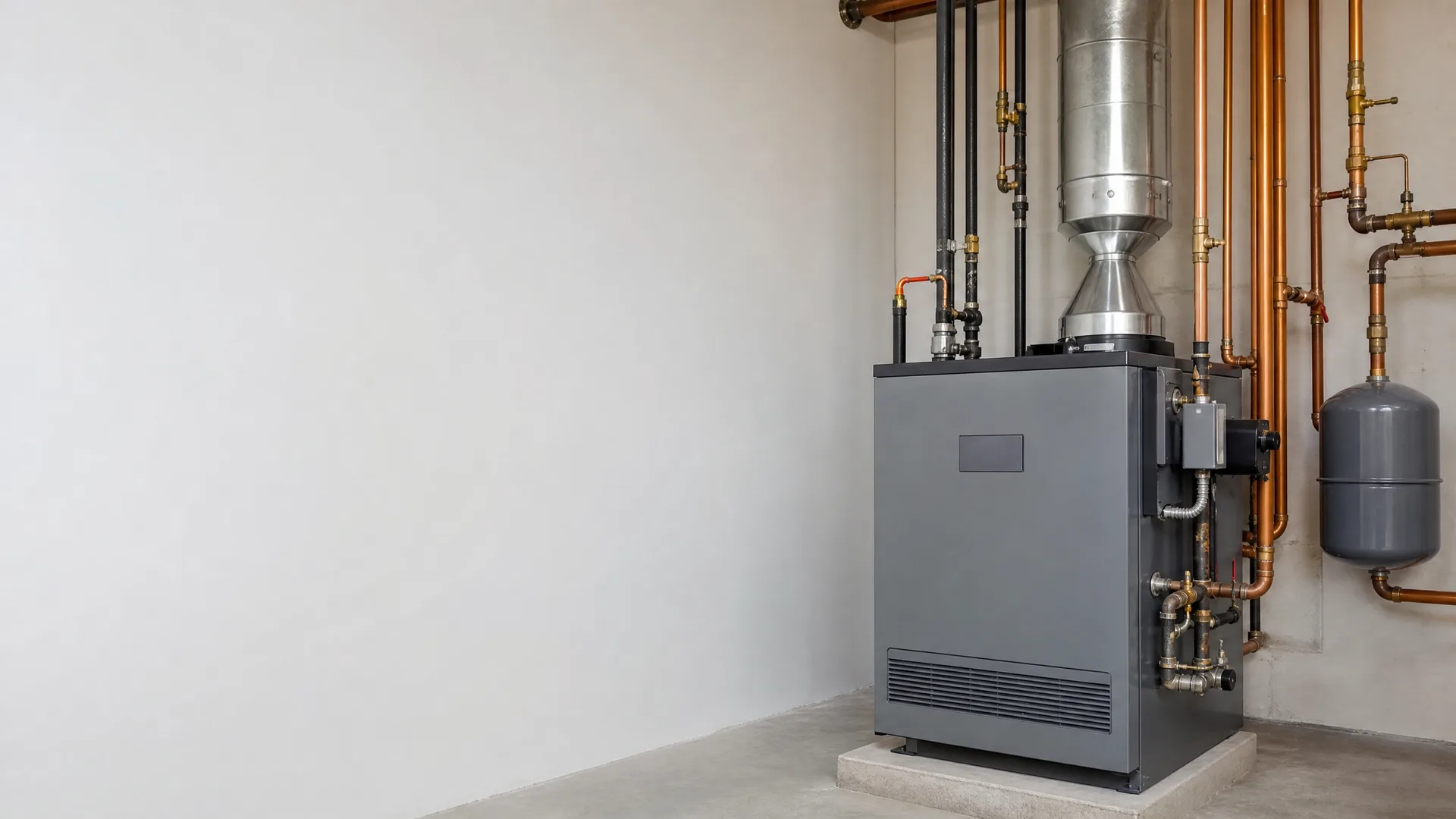
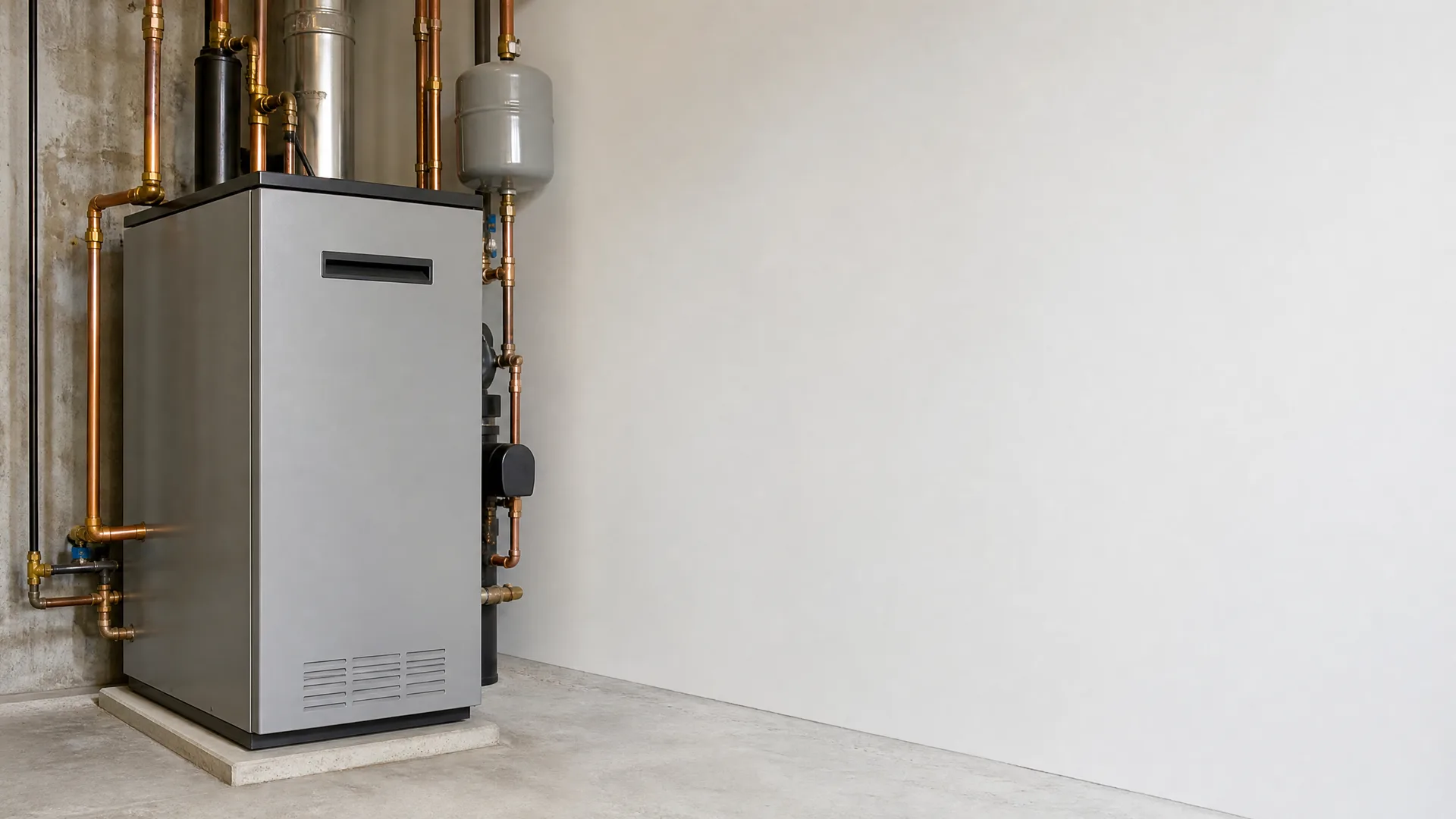
A gray floor-standing boiler on a concrete pad in a bare room, connected to copper pipes and an expansion tank against a plain light wall.

What causes the buildup

That noise comes from scale, mostly calcium and magnesium, coating the inside of the heat exchanger. As the burner fires, water trapped under that layer flashes to steam pockets that collapse and knock against the metal. The thicker the scale, the louder it gets. Montana water running through a boiler for years will leave some deposit behind no matter how careful anyone is with the system.

A gray boiler on a concrete pad in a plain room, connected to copper and black pipes and a stainless steel flue.

Why it keeps running worse

Scale acts like a blanket between the flame and the water, so the heat exchanger has to work harder to pass the same heat through. The boiler cycles longer to reach the same temperature on your thermostat. With gas prices in Montana what they are, that inefficiency shows up on the bill before it shows up as a breakdown. Left alone, the metal underneath the scale can overheat and crack.

Ride It Out or Get It Flushed

Live With It

  • The kettling noise itself won't shut your boiler down tonight, so you can wait a few days without being stuck in the cold.
  • Scale buildup gets worse over time, so the noise will likely get louder, not quieter, the longer you leave it.
  • A heat exchanger working against a layer of scale runs harder to put out the same heat, which shows up on your gas bill.
  • Scale traps heat against the metal of the exchanger, and that's the kind of stress that cracks a heat exchanger over time.
  • Montana winters run long, and a boiler laboring through all of them with scale buildup has more months of strain than one that gets flushed out.

Get It Repaired

  • A contractor can flush the system and descale the heat exchanger, which clears the buildup causing the knocking sound.
  • Getting matched means you skip calling around to different HVAC companies and repeating the same description of the noise each time.
  • A contractor can check your water hardness and boiler settings together, since either one can let scale rebuild after a flush.
  • Instead of comparing quotes on your own, you get connected with a contractor suited to boiler repair in your area.
  • Fixing the scale now, before a Montana winter sets in, means your boiler isn't working against that buildup through the coldest months.
A smiling woman with dark shoulder-length hair in a cream V-neck sweater sits at a marble counter with a glass of red wine, with a kitchen and softly lit living room behind her.
A woman in a dark green sweater laughs while seated at a marble kitchen island with a glass of red wine, with open shelving, cabinets and a living room visible behind her.
A woman with long dark hair in a cream knit sweater laughs while looking off to the side, seated at a counter with a glass of red wine, in a dimly lit living room with a sofa, lamp, framed pictures and houseplant behind her.
A smiling woman with long dark hair in a beige sweater sits at a marble kitchen counter with a glass of red wine, with a dimly lit living room behind her.
A woman stands in the open doorway of a white stucco house holding the dark door, facing a man in a black cap and shirt seen from behind in the blurred foreground, with a potted flowering plant beside the entry.

What this sounds like from your kitchen

At night, with the house quiet, the kettling carries through the floor and up the stairs. You'll hear it most when the burner first kicks on, since that's when the trapped water under the scale turns to steam. The sound doesn't mean the boiler is about to die, but it does mean the heat exchanger is working harder than it should to get the same heat into your rooms, which shows up on the gas side of your bill even with power staying cheap in Montana.

Left alone, the scale keeps building and the noise keeps climbing with it. Finding someone who works on boilers, getting them out to look at yours, and explaining the same noise more than once is its own chore on top of a cold house. Answer a few questions about what you're hearing and you'll be matched with a contractor who handles this kind of repair, and they'll reach out to you directly.

A wooden table holding a stone vase with a bare branch, two stacked books and a small dark bowl, beside a window with green foliage outside and a sofa in the dim background.
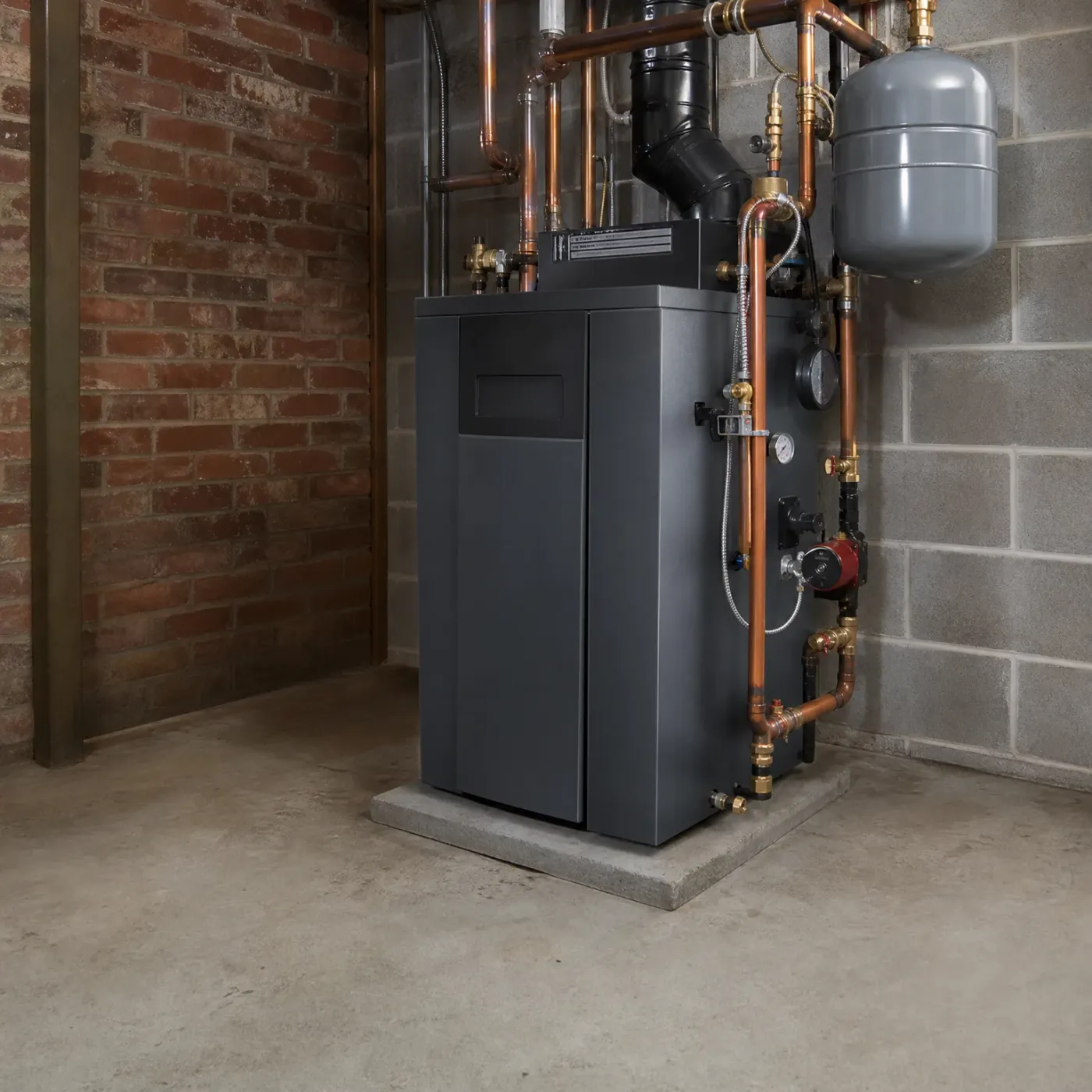
A dark gray floor-standing boiler on a concrete pad in a basement, connected to copper piping, valves, a circulator pump, a gauge, a black flue pipe, and a gray expansion tank, with a brick wall on the left and concrete block wall behind.

A quiet boiler

When the heat exchanger is clear, the burner fires and the water moves through the copper pipes without a sound worth noticing. The gauges hold steady and the expansion tank does its job without any complaint from the system around it.

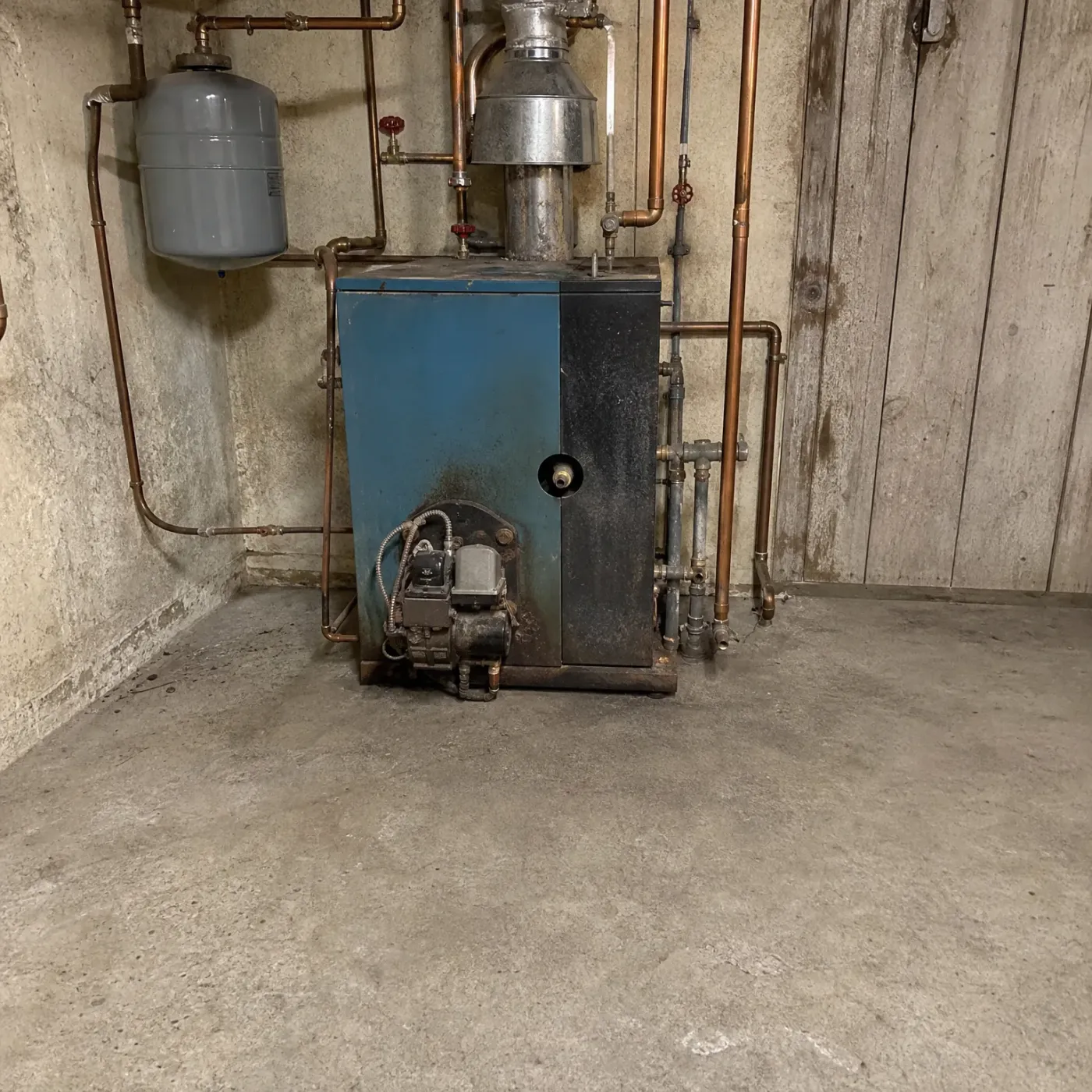
A blue and black boiler with a burner unit, flue, expansion tank and copper and steel piping stands on a concrete basement floor against a concrete wall and wooden plank partition.

A boiler coated in scale

This is the same kind of setup after years of hard water leave a layer inside the exchanger. Steam gets trapped under that scale and the knocking starts, usually right when the burner kicks on for the evening.

A gray residential boiler with a metal flue pipe stands in a concrete-block basement corner, surrounded by copper piping, valves and a gray expansion tank.
Before you get your boiler repair
A dark gray floor-standing boiler in a concrete-walled basement, connected to copper piping, circulator pumps, a gray expansion tank, and a cream-colored storage tank to the left.
After you get your boiler repair

Keep waiting and the noise keeps you company through the rest of winter, getting louder as the scale thickens, while you still have to track down a contractor, explain the noise over the phone, and sort through quotes before anyone touches the boiler.

Get matched with a contractor now and that search ends: no calling around, no repeating the story to each one, no comparing bids on your own. You just wait for someone qualified to reach out.

A smiling bearded man in a navy crewneck sweater sits at a dinner table with a glass of red wine, plates and glasses in the foreground, in a dimly lit room with a lamp and framed picture behind him.
A woman in a dark gray sweater reclines on a light sofa with eyes closed and a slight smile, under a textured gray blanket with an open book resting on her lap, with a lit table lamp and plant in the background.
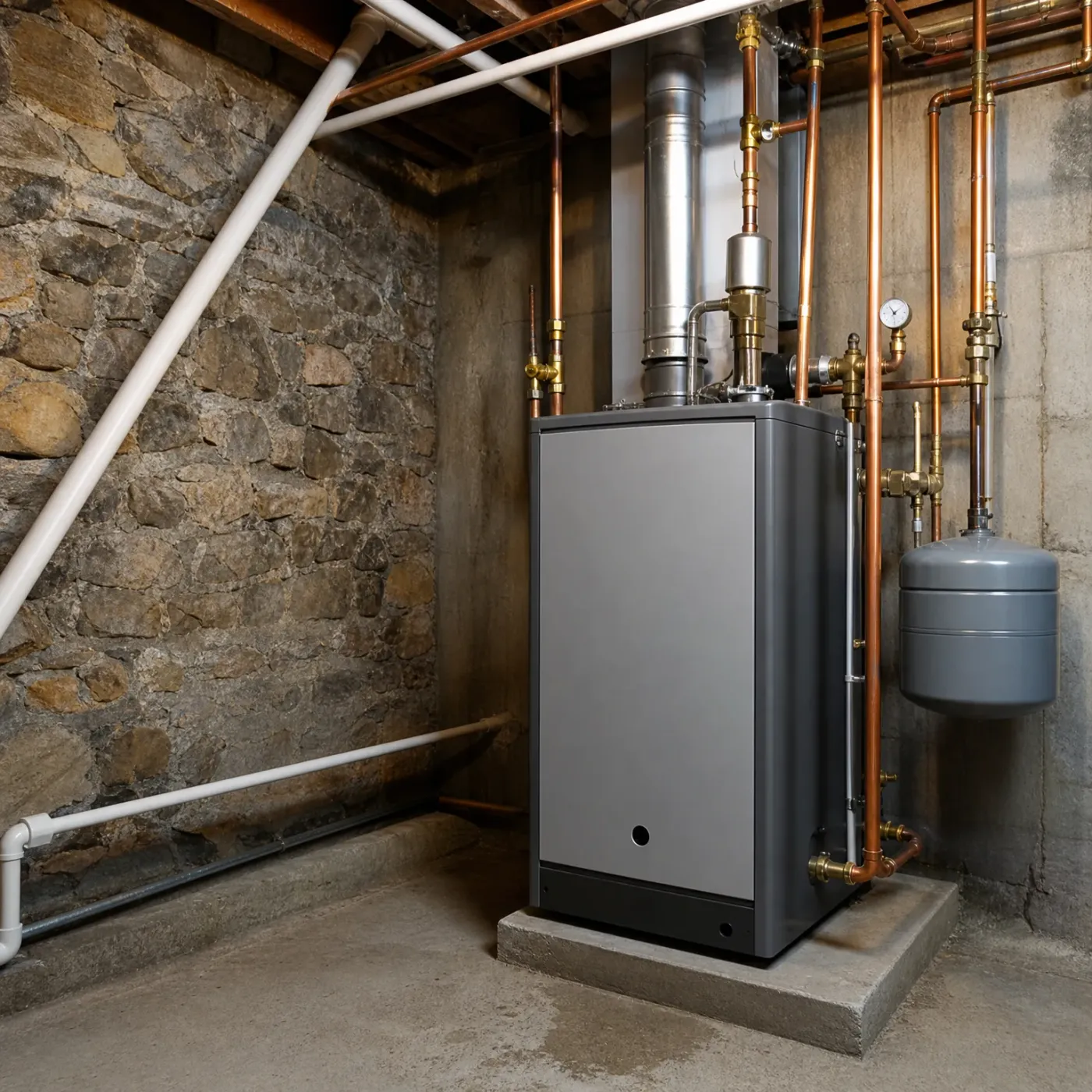
A gray floor-standing boiler on a concrete pad in a basement, connected to copper piping, a metal flue, a gauge, and a gray expansion tank, beside a stone wall and white insulated pipes.

Get your boiler to the right pro

Describe what your boiler is doing once, in one form.

A local pro who knows boilers gets your details and gets in touch.

Describe it once

It costs nothing to send, and you don't have to hire anyone.

Winter nights average 15°F statewide

Those 15°F nights mean your boiler is firing hard and often, all winter long. Every cycle pushes more water through that scaled heat exchanger, so the kettling you hear tonight is only going to get louder as the cold season wears on.

NOAA nClimDiv 1991-2020 county normals weighted by homes

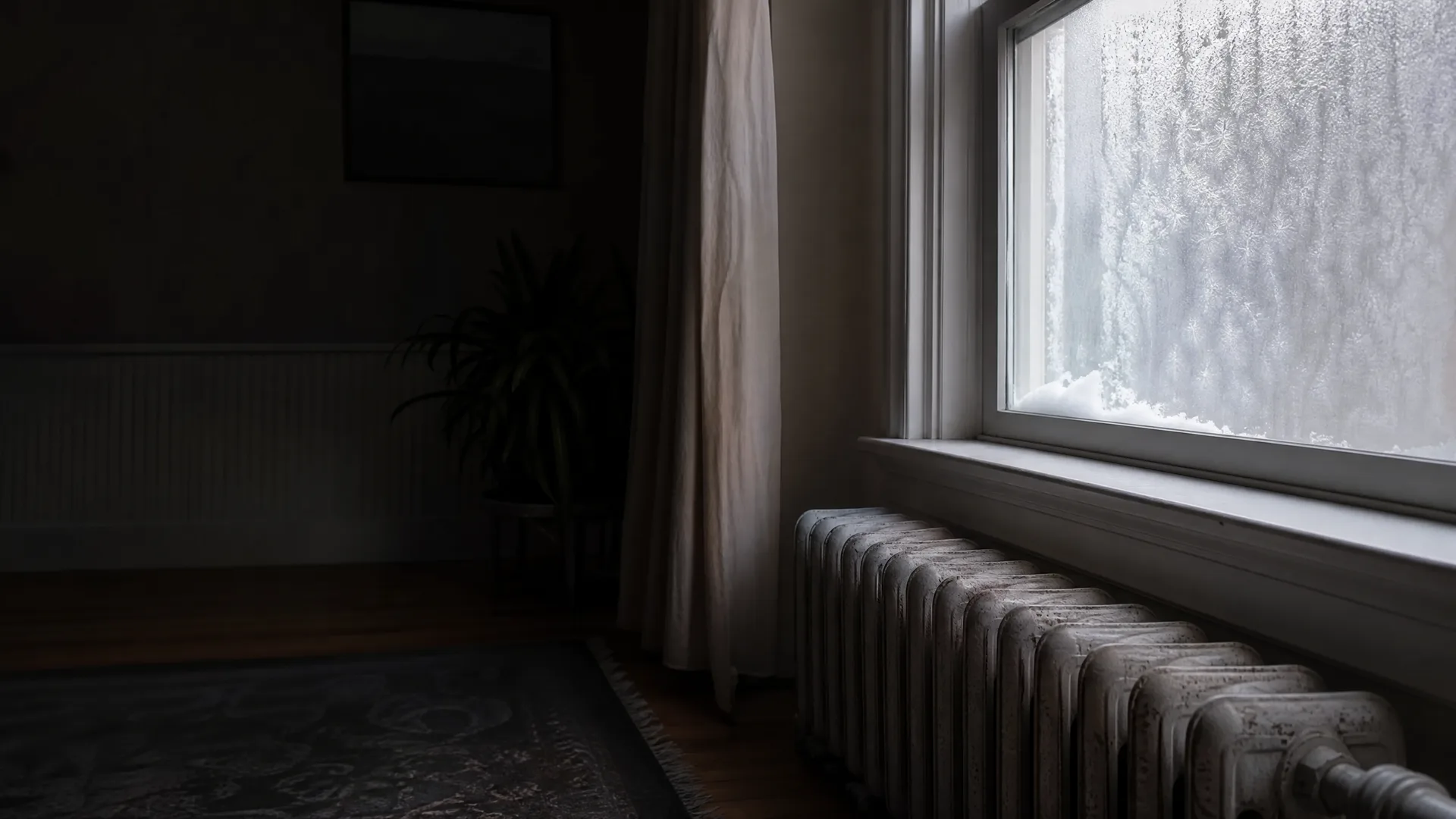
A dimly lit room with a cast-iron column radiator beneath a wide window covered in frost and snow, with a pale curtain, a potted plant, and a patterned rug on a wood floor.

It's just past six in the morning and still dark outside. You're in the living room waiting for the house to warm up before the rest of the family is up. The window over the radiator has ice crusted on the inside of the glass, feathered out at the edges where your breath has been fogging it all week. The cast-iron radiator under it ticks as it heats, and underneath that, from somewhere down in the basement, the boiler starts its low rumble and pop. You set your coffee on the sill, close enough to feel the radiator's heat against your hand, and wait for the room to catch up with the cold still pressing through the glass.

What am I actually hearing every time it fires?

You'll hear it a few seconds after the burner kicks on, a rumble or a series of knocks coming from inside the boiler itself, sometimes loud enough to carry through the floor. It might taper off after a minute, then start again on the next cycle. You may also notice the boiler taking longer to bring a room up to temperature, or the gauge running warmer than it used to for the same setting. None of that means it's about to fail tonight, but a heat exchanger working around scale is working harder than it should, and that shows up on your gas bill before it shows up anywhere else.

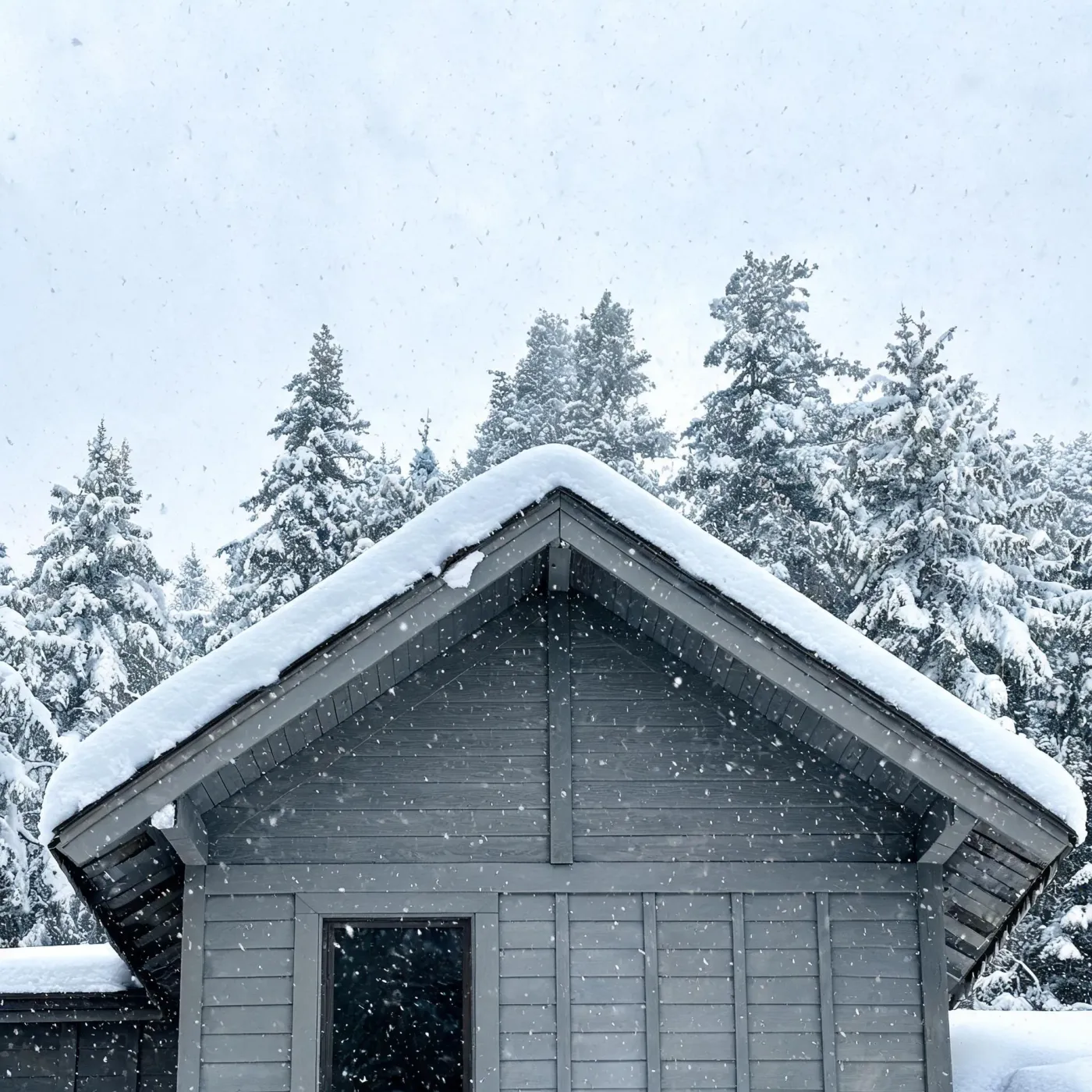
Gable end of a gray wood-clad cabin with a snow-covered roof, falling snowflakes, and snow-laden conifer trees behind it under a pale overcast sky.

Statewide, winter nights average 15°F, and your boiler has to work to keep up with that from the first hard freeze through the thaw in spring. Every time the burner fires to chase that cold off, water pushes through the heat exchanger again, and if scale has built up inside it, that's another round of kettling. Cold nights don't cause the noise, but they're why you hear it so often this time of year. You'll likely notice it most right when the burner kicks on, before the house has caught up to the thermostat. Source: NOAA climate normals.

NOAA nClimDiv 1991-2020 county normals weighted by homes

A gray boiler with a metal flue pipe stands in a basement against concrete and concrete-block walls, connected to copper piping, a circulator pump, and two gray expansion tanks.
Pipes, gauges, and the expansion tank all sit still and quiet, with no knock coming from the heat exchanger underneath.
A gray boiler on a concrete pad in a basement with painted concrete block walls, copper piping, a metal flue, and electrical control boxes.
Scale has built up unseen inside this older unit, and the knock under the burner is the sign something's coating the metal.

The kettling you hear is scale coating the heat exchanger, and it won't clear on its own. A boiler making that noise now will likely still be making it in January, only louder, since every firing cycle through a Montana winter pushes more water through metal that's already coated. Left alone, the sound doesn't go away. What's actually in front of you is a decision about when to have someone look at it, not whether. Finding that someone is usually its own chore: calling a few places, describing the knocking sound over the phone to whoever picks up, waiting on callbacks, then comparing quotes that don't line up with each other. That part doesn't have to happen here. You can skip the round of calls and the repeated explaining, and instead get matched with a contractor who takes boiler repairs in your area and hears from you once, directly, about what you're hearing. The boiler itself still needs a look. But the work of tracking down who's going to give it one doesn't have to sit on your evening along with everything else.

A covered porch with a wood front door with six upper glass panes, a lantern wall sconce, tapered column on a stone base, potted ferns and flowers, a woven doormat, and wide steps leading to a paver walkway bordered by shrubs and white hydrangeas.
A beige upholstered sofa with a cream cushion and chunky knit throw sits beside a white-framed window, with a leafy potted plant in a stone vase against a tan wall.
Sunlit corner of a room with a linen curtain beside a window, built-in shelves holding ceramic vases, wooden bowls, a potted green plant, stacked books and a woven basket, above a textured rug.
A dark wood three-drawer dresser against a pale wall holds a tall ceramic vase with leafy branches, stacked books and a shallow bowl, with a framed print above, a woven basket on the wood floor at left, and an upholstered sofa with a green pillow in the foreground.
A cream upholstered sofa with a textured ivory cushion and a rust-colored cushion sits beside a window with sheer linen curtains, with a potted leafy plant behind it and a wooden bowl on a wood table in the foreground.

The right pro for this job

Answer a few questions instead of calling shop after shop.

Start one form

No charge to send it. You decide if you hire them.