



Treasure State Boilers
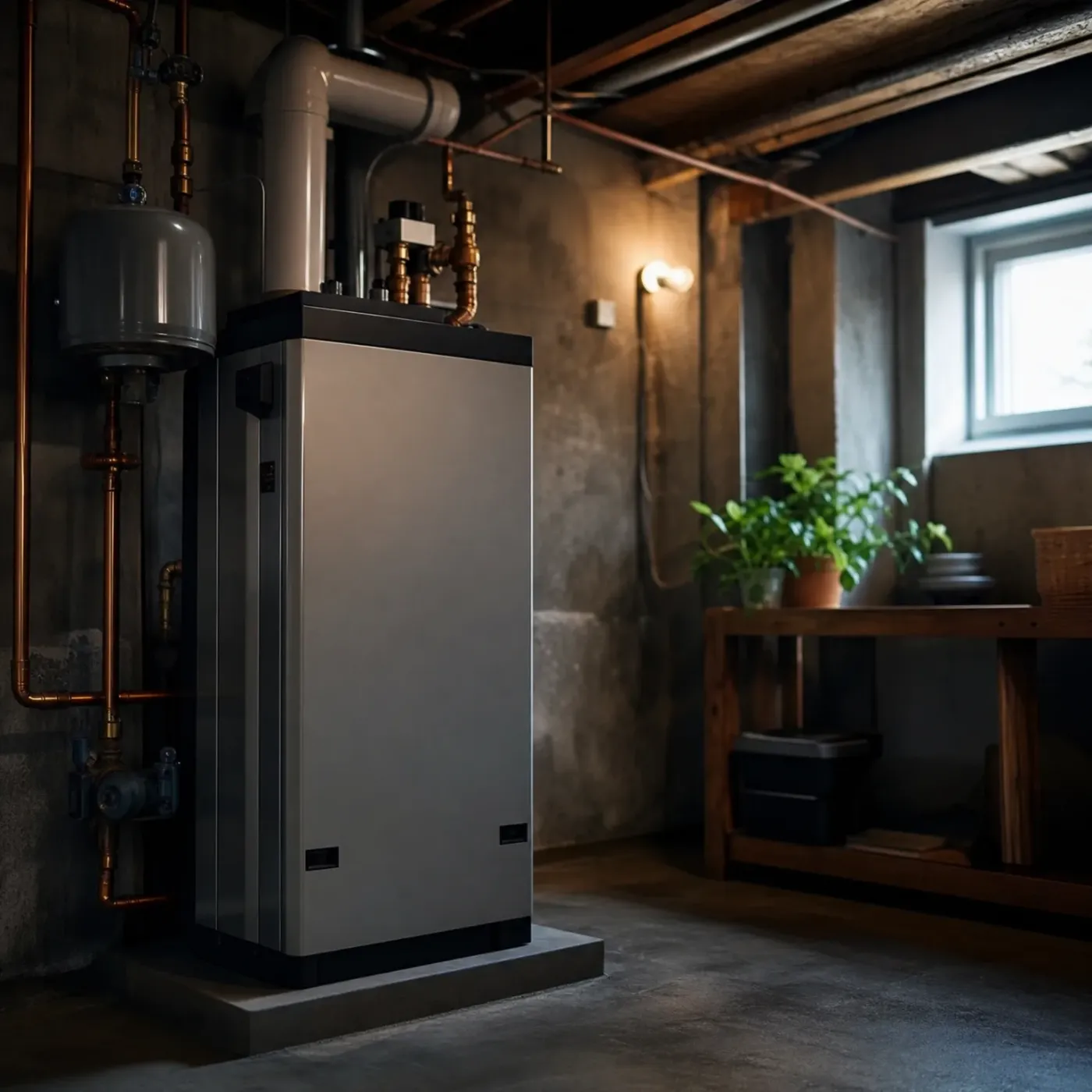
A floor-standing gray boiler unit on a concrete plinth in a basement, with copper pipes, an expansion tank, and a flue pipe above, a wall light, a small potted plant on a wooden shelf, and a window in the background.

No phone calls to make

Signs your boiler won't last a Montana winter

A boiler that's limped along since September can quit outright once it hits zero outside. This page walks through the warning signs, the banging pipes, the pilot that won't hold, the rooms that stay cold, so you know what's serious before January tests it. No calling around three or four companies and repeating the same story each time. One local contractor who works on boilers all winter, every winter, looks at yours and tells you straight what's failing and what it'll take to get through the cold.

Skip the search

A boiler that won't make it through a Montana winter usually tells you before it quits. Listen for banging or gurgling in the pipes, that's air or sediment in the system, and it gets worse as the boiler works harder below zero. Watch the pilot or igniter: if it won't hold a flame or keeps shutting off, the boiler is struggling to keep combustion stable, and a cold snap is when that failure shows up hardest. Rooms that used to heat evenly but now stay cold, or a boiler that runs longer to do the same job, both mean it's losing ground against the cold rather than keeping up with it. None of these mean the boiler is finished, but each one is a sign it's working harder than it should to do what it used to do without strain. Catching it now, before a hard freeze, is the difference between a repair and a boiler that fails on the coldest night of the year.

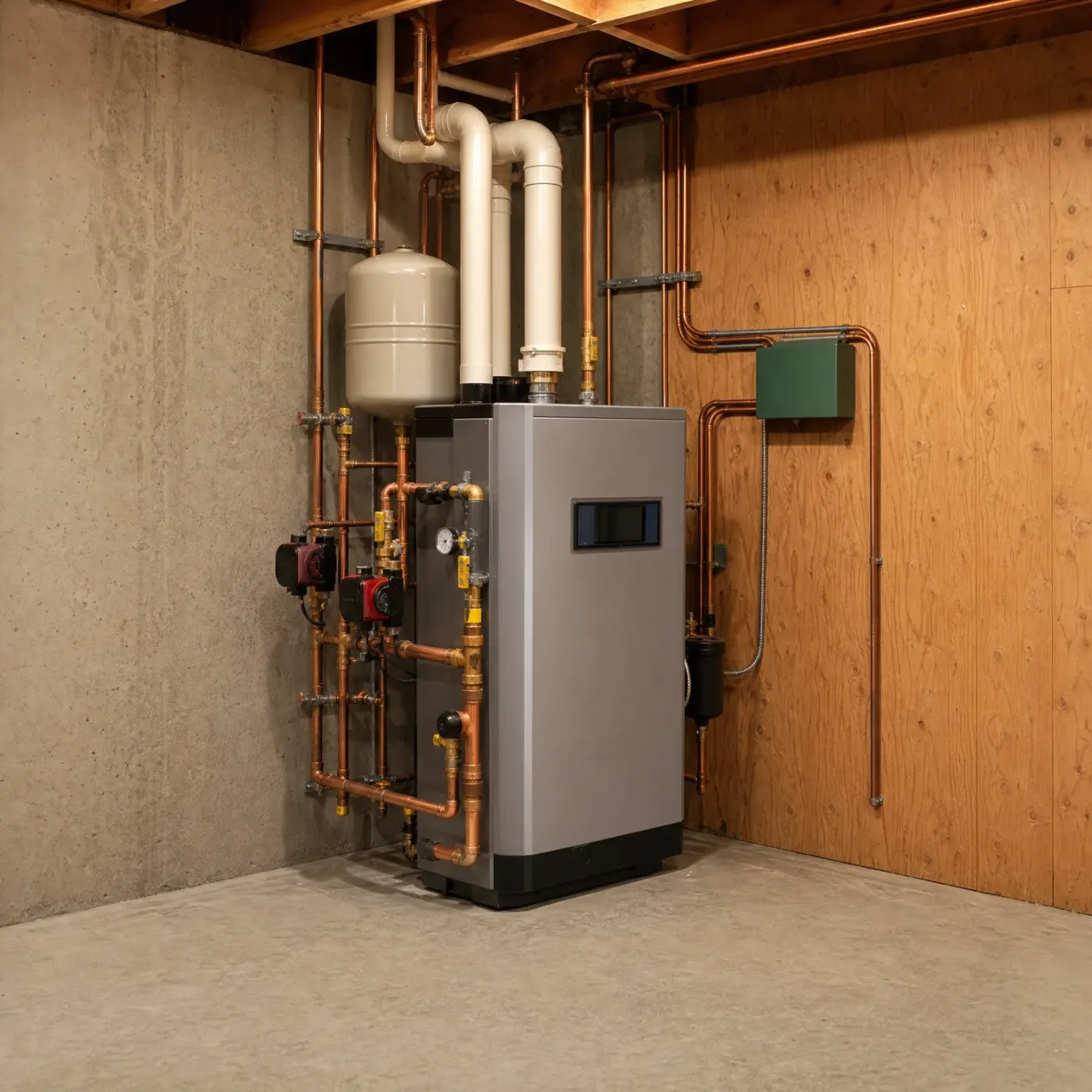
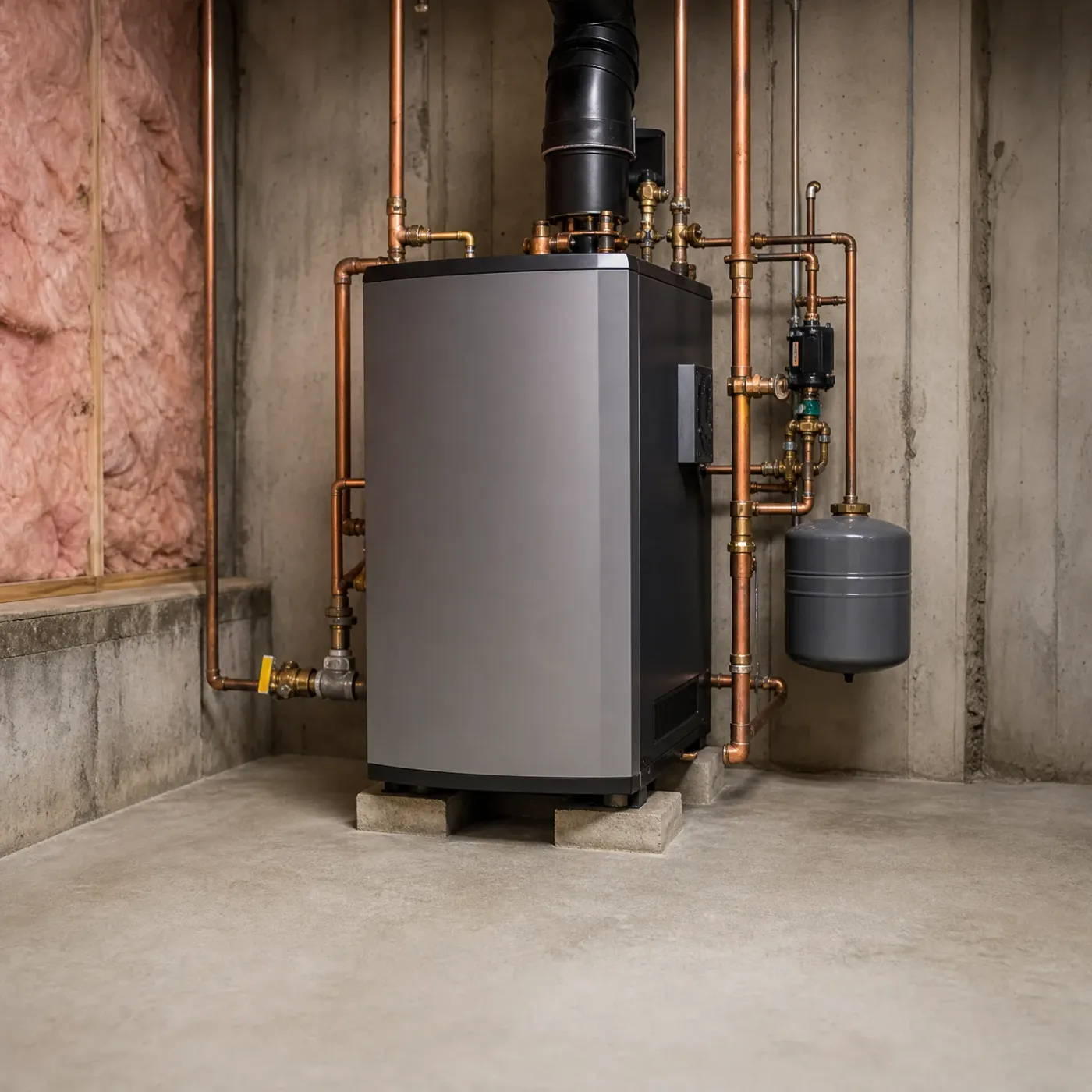
A gray floor-standing boiler in a basement corner with copper piping, two red circulator pumps, a beige expansion tank, white PVC vent pipes, concrete and plywood walls.
Steady heat, clean fittings, pressure holding where it should, this is a boiler set up to run all winter without drama.
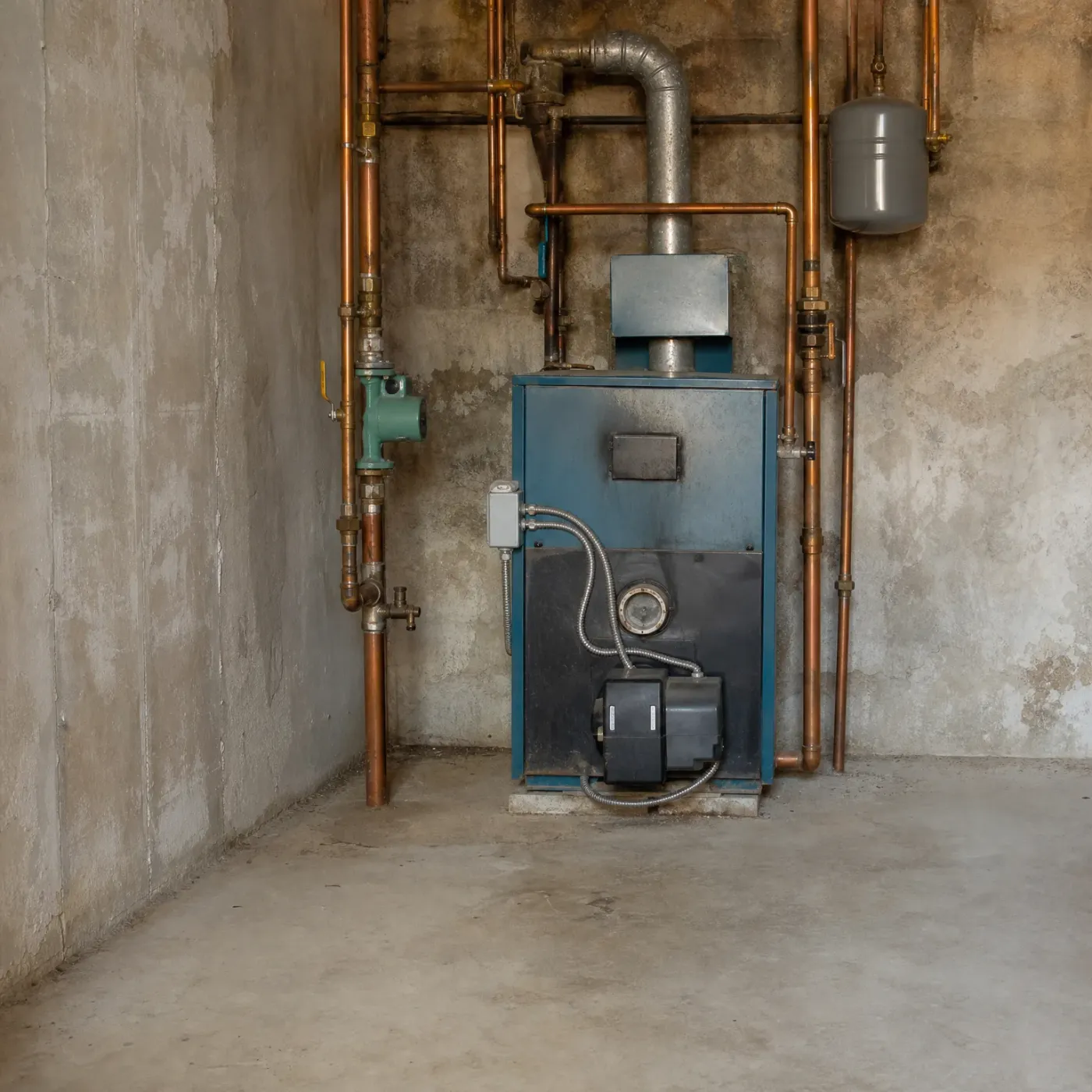
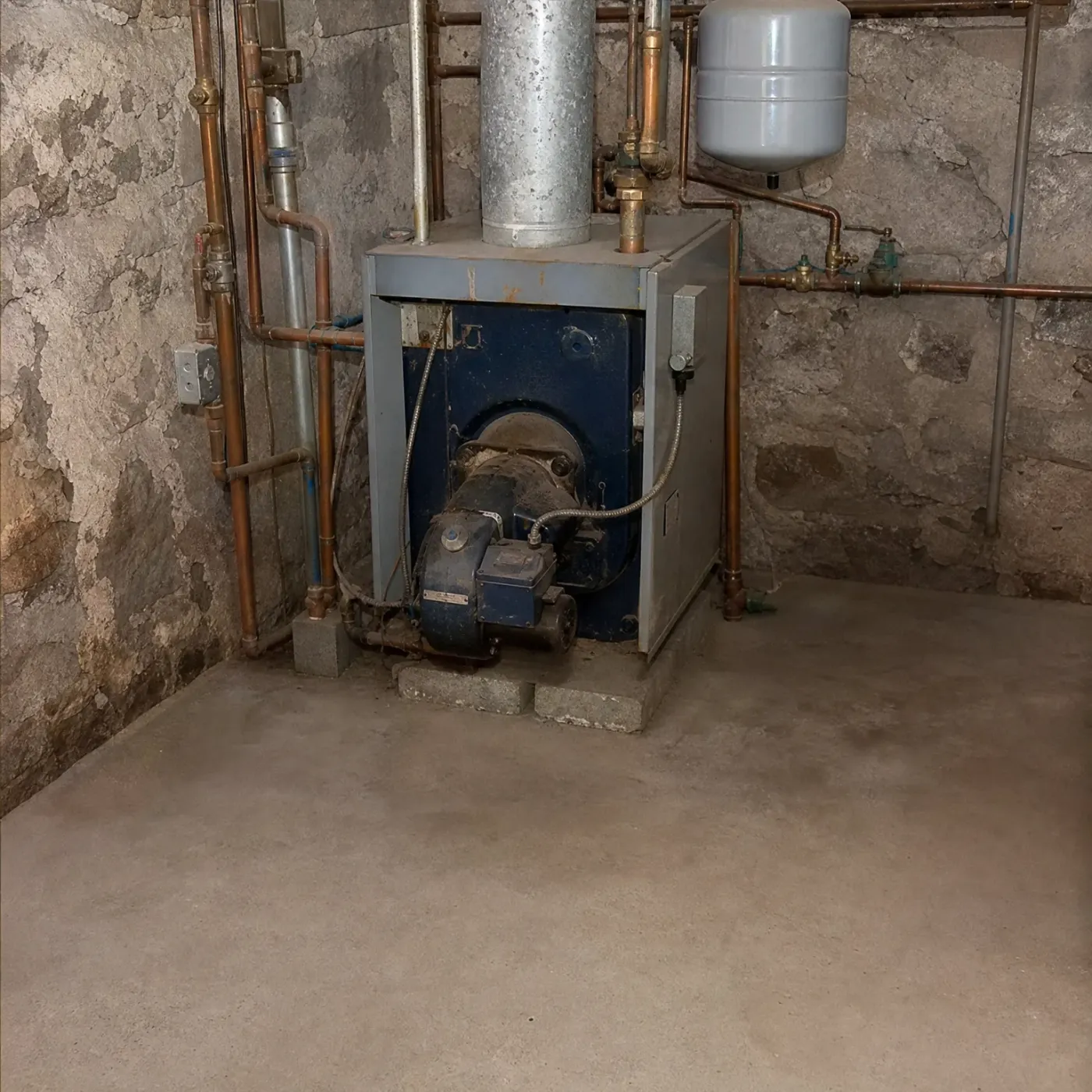
A blue residential boiler with a metal flue, pressure gauge and burner unit stands against a stained concrete basement wall, surrounded by copper pipes, a green circulator pump and a gray expansion tank.
A bare block wall, galvanized flue, a housing that's seen better days, this is a boiler that's one cold snap from a no-heat call.
A man with grey hair and stubble in a dark sweater sits on a grey sofa indoors, looking off to the side, with a potted plant and a sunlit window behind him.
A man with gray hair, a beard and glasses, wearing a dark green sweater, sits on a gray sofa in a sunlit living room with a potted plant, table lamp and wooden sideboard behind him.
A middle-aged man with graying hair and a short beard sits on a blue sofa in a living room, looking toward a window, with a bookshelf, lamp and framed picture in the background.
A man with graying curly hair and a dark green sweater sits on a gray sofa in a sunlit living room, looking off to the side, with a framed picture, shelving, an armchair and a window with sheer curtains behind him.

Is your boiler actually ready for January?

Walk past it and pay attention. A room that used to heat fine but now stays cool, a radiator that's warm at the bottom and cold at the top, a thermostat you keep nudging up just to feel even. Listen for a burner that clicks and clicks before it lights, or a pilot that goes out on its own. Look at the floor underneath for a damp spot, even a small one. Check the pressure gauge, if it's drifting low or you're adding water to the system more than you used to, something is letting it out. None of this means much in October. Below zero, with the boiler running nonstop to keep up, any one of these can turn into a house with no heat and pipes that freeze.

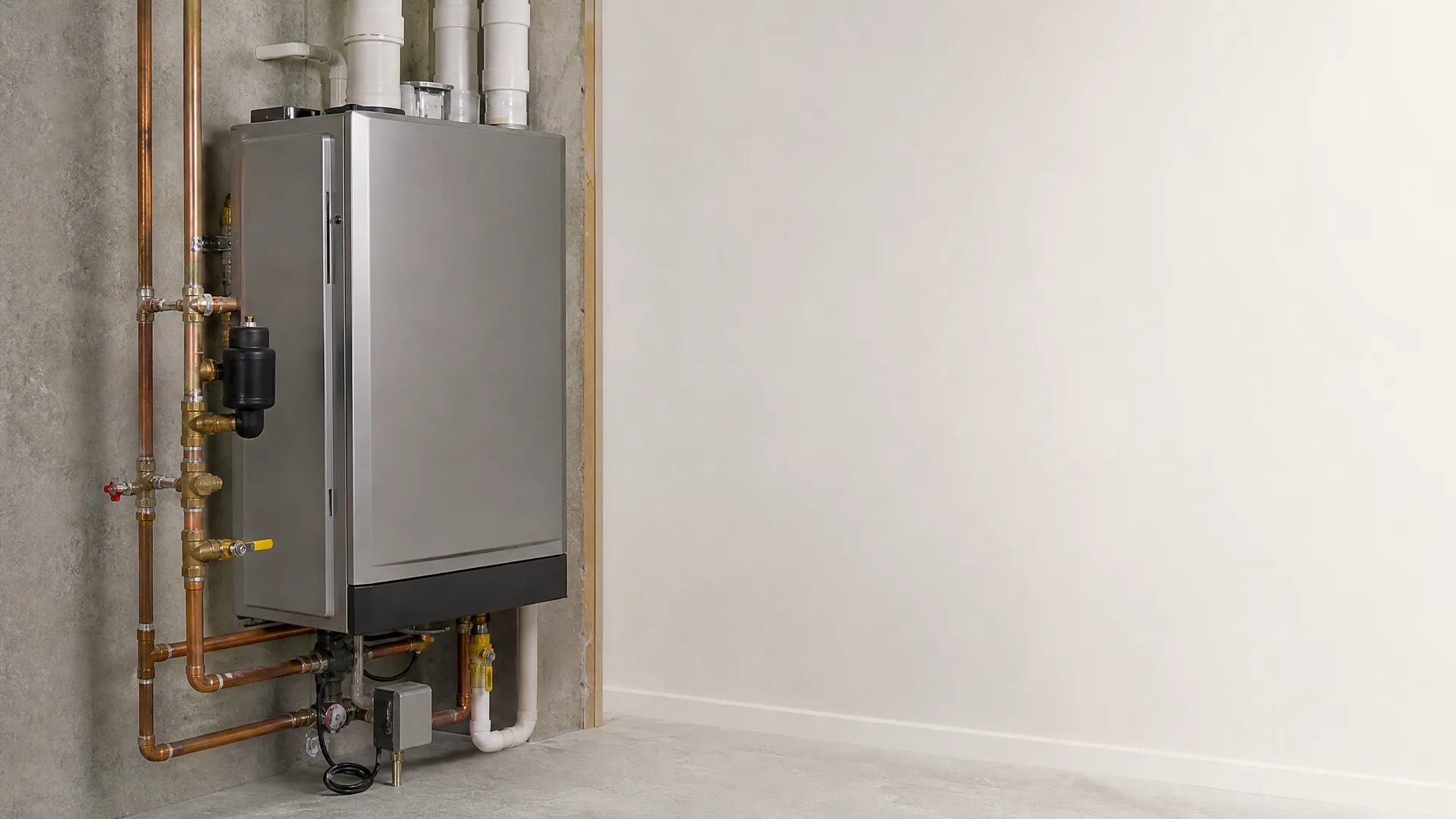
A wall-mounted grey boiler with copper pipework and white flue pipes installed against a concrete wall in an empty room with a plain pale wall to the right.

Why cold snaps find the weak point

A boiler sized right for your house runs long, steady cycles even at ten below. One that's already struggling short-cycles instead, firing up, shutting off, firing again, because it can't keep up with the heat loss once it's that cold outside. Each short cycle stresses the heat exchanger more than a long steady burn would. That's often the difference between a boiler that makes it to March and one that doesn't.

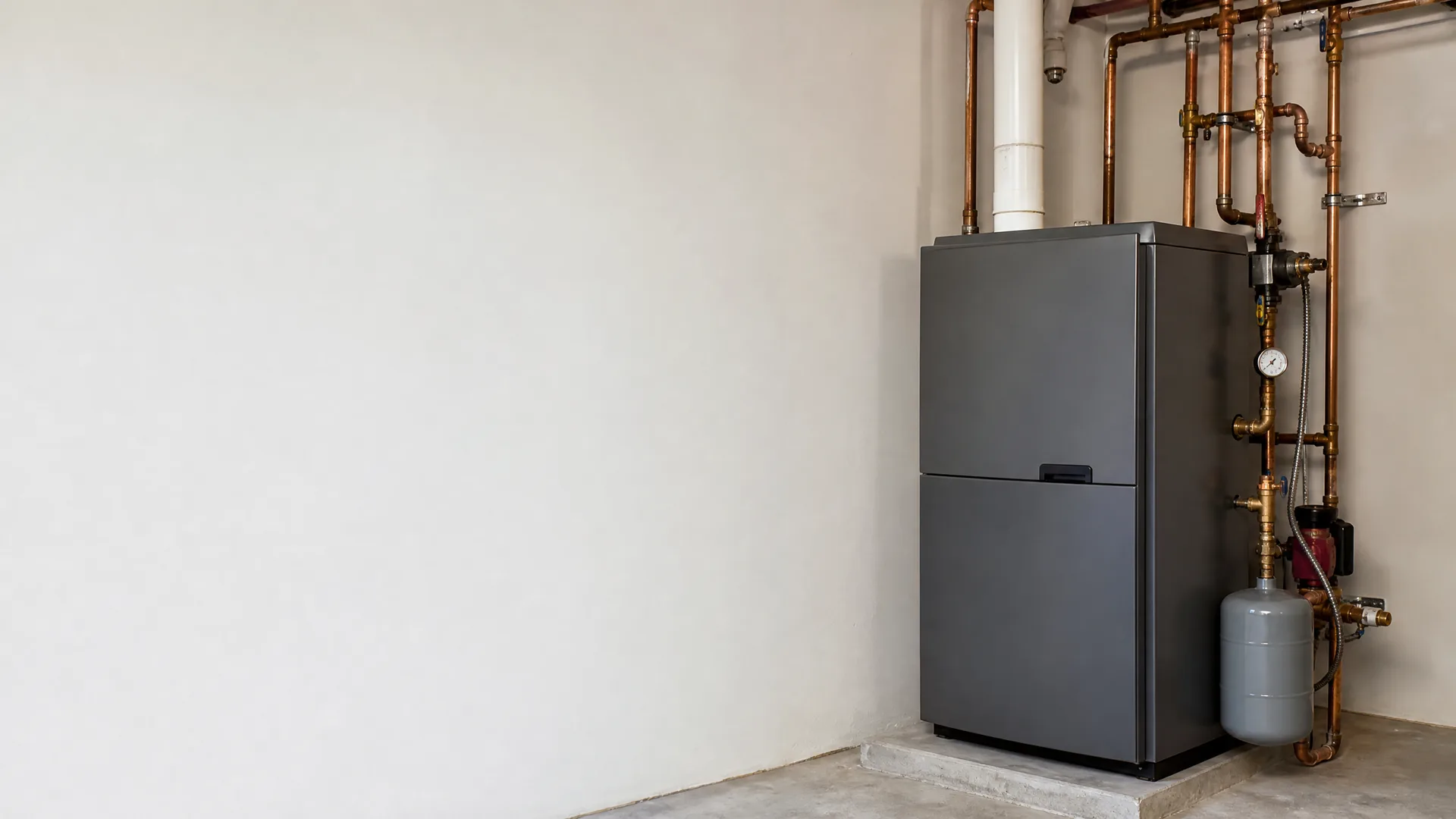
A dark grey boiler unit stands on a concrete pad against a plain light wall, connected to copper pipes, a pressure gauge, a pump and a grey expansion tank.

What sediment does over a winter

Hard water leaves mineral buildup inside the heat exchanger and at the bottom of the tank on older cast iron units. That layer insulates the metal from the water around it, so the burner has to work harder and longer to move the same heat. A boiler with heavy sediment often sounds like it's percolating or popping when it fires. By January, that same buildup is why some units can't keep rooms above 60.

Why does my boiler make a banging noise when it's cold out?

Cold snaps seem to bring it out worse. You turn the heat up on a hard night and the pipes start knocking under the floor or behind the wall, loud enough that it wakes you up. It wasn't doing this in October. You want to know if it's the kind of noise that means something is actually wrong, or just an old boiler being an old boiler.

It's almost always sediment or trapped air, and cold makes it worse

That banging is usually kettling: sediment has settled on the bottom of the heat exchanger, and water trapped under it flashes to steam as the burner fires. The harder the boiler works to keep up with a Montana cold snap, the hotter that spot gets, so the noise gets louder right when you need the heat most. Trapped air in the pipes causes a similar knock as it moves through the system under pressure. Neither one fixes itself. Left alone, sediment buildup makes the heat exchanger work harder than it should, and that's the kind of stress that shortens how long a boiler lasts through a winter like this one.

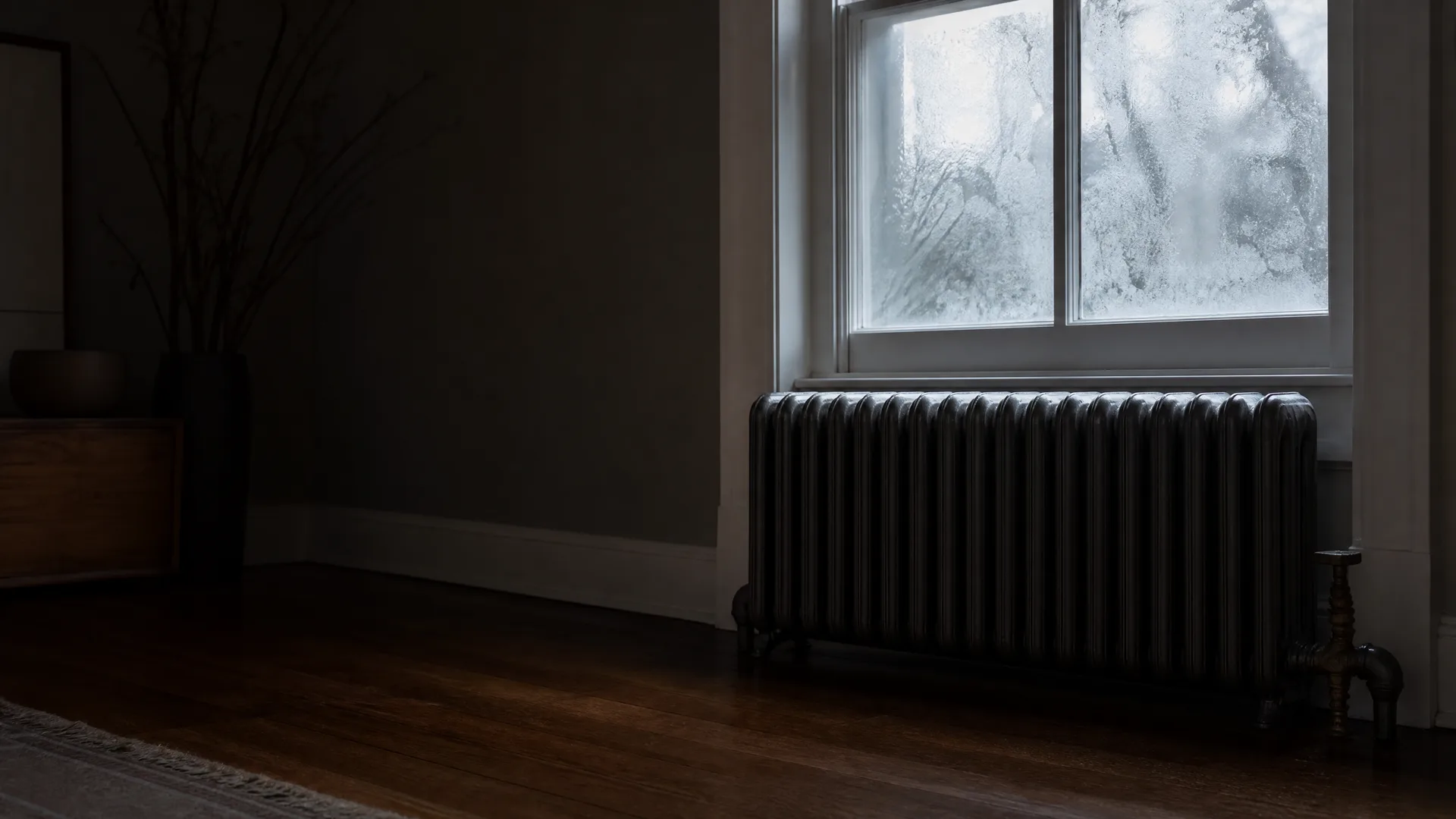
A cast-iron column radiator stands beneath a frosted window in a dim room with dark walls, a wood floor, and a vase of bare branches on a low cabinet at left.

You're up before the sun, same as every January morning, and the living room is cold enough that you can see your breath for a second before the radiator catches up. It never used to take this long. You sit on the edge of the couch with your coffee and watch the glass on the window above the radiator, a thin skin of ice on the inside pane, the kind that forms when the room can't hold heat against a night that hit zero outside. The cast iron under the sill is warm at the bottom, barely warm at the top. Outside the thermometer still reads single digits. You pull your robe tighter and wait to see if the room ever catches up before you have to leave for work.

One form, no calling around

You've read through the signs, and maybe two or three of them sound like your boiler. Now comes the part that actually matters: getting someone qualified to look at it before the next hard freeze, not after it quits. On your own, that usually means searching around, calling a handful of shops, explaining the banging pipes and the cold radiator and the pilot trouble to each one, then waiting on quotes and trying to judge which contractor actually knows boilers and isn't just guessing. That's a lot of effort for a problem that's already keeping you up at night. Submit a request here instead and it goes to one licensed Montana contractor, someone who works on these systems all winter and has seen what a Montana cold snap does to a boiler that's past its prime. No juggling calls from five different companies, no repeating yourself. Just one person who knows this equipment, looking at your specific situation before it decides for you.

Worth a repair call now

A boiler that's heating unevenly, making noise, or holding pressure low but still lighting every time and warming the place up eventually is usually worth fixing. One bad igniter, one stuck valve, one pocket of air in the lines, these are things a contractor clears in a visit. If the boiler's basic parts, the heat exchanger, the burner, the block, are sound, repair buys you the rest of this winter and probably several more. The signs you're watching for are warnings, not a verdict. Most boilers that are banging or short-cycling in December are still boilers worth saving.
Past what a repair fixes

If the boiler's been patched more than once this season already, or the leak is coming from the block itself rather than a fitting, repair starts running into its limit. A cracked heat exchanger doesn't get welded back together. Rust coming through the jacket means the metal's going, not just the part that failed. A contractor can tell you in one visit whether you're looking at another repair or a system near the end of what it can do. Below zero is when a boiler that's already struggling finally shows you which one yours is.

An oil-fired boiler with a blue and gray cabinet and burner sits on concrete blocks in a basement corner with stone walls, connected to copper pipes, a metal flue, and a wall-mounted expansion tank.
Before you get your boiler repair
A gray and black boiler unit sits on concrete blocks in a basement corner, connected to copper piping, valves, a black flue duct, and a gray expansion tank, with bare concrete walls and exposed pink insulation at left.
After you get your boiler repair

Boiler makes it to April on its own

It holds pressure, lights on the first try, and heats every room evenly. Keep an eye on it, but it doesn't need anyone out there before spring.

Reach a local pro

Boiler needs a hand to make it to April

Pressure keeps dropping, a room or two won't heat, or the pilot's gotten fussy. Left alone, a hard cold snap is what finds out the rest.

Reach a local pro
A woman with shoulder-length brown hair wearing a beige knit cardigan sits in a gray upholstered armchair near a window, looking off to the side with a slight smile, with bookshelves blurred in the background.
A woman with her hair in a bun holds a sleeping young child against her chest, both wrapped in a textured beige knit blanket on a sofa in a dimly lit room with a lamp, framed picture, and bookshelf behind them.
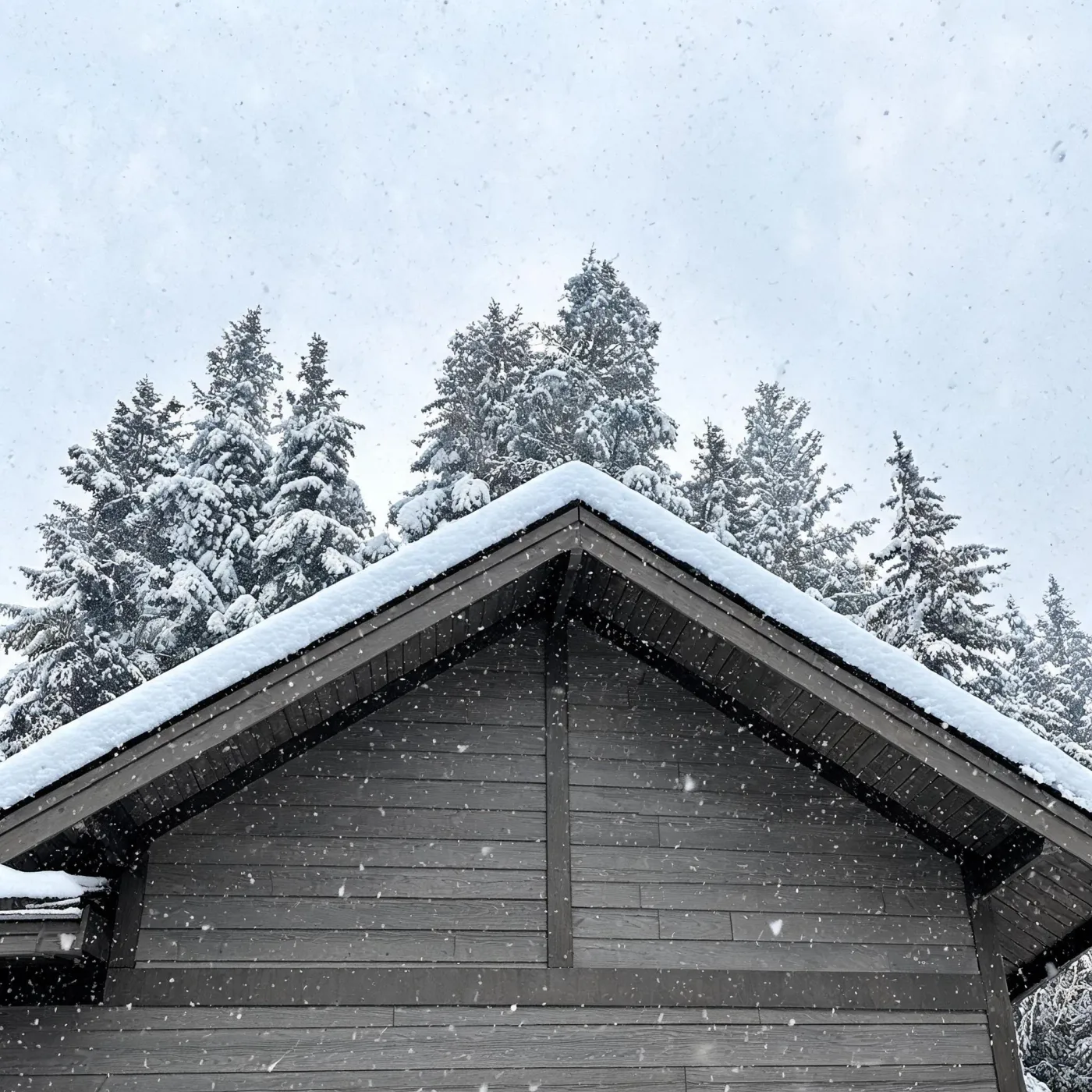
Snow-covered gable roof and dark wood-clad upper wall of a building, with snow-laden conifers and falling snowflakes against a pale overcast sky.

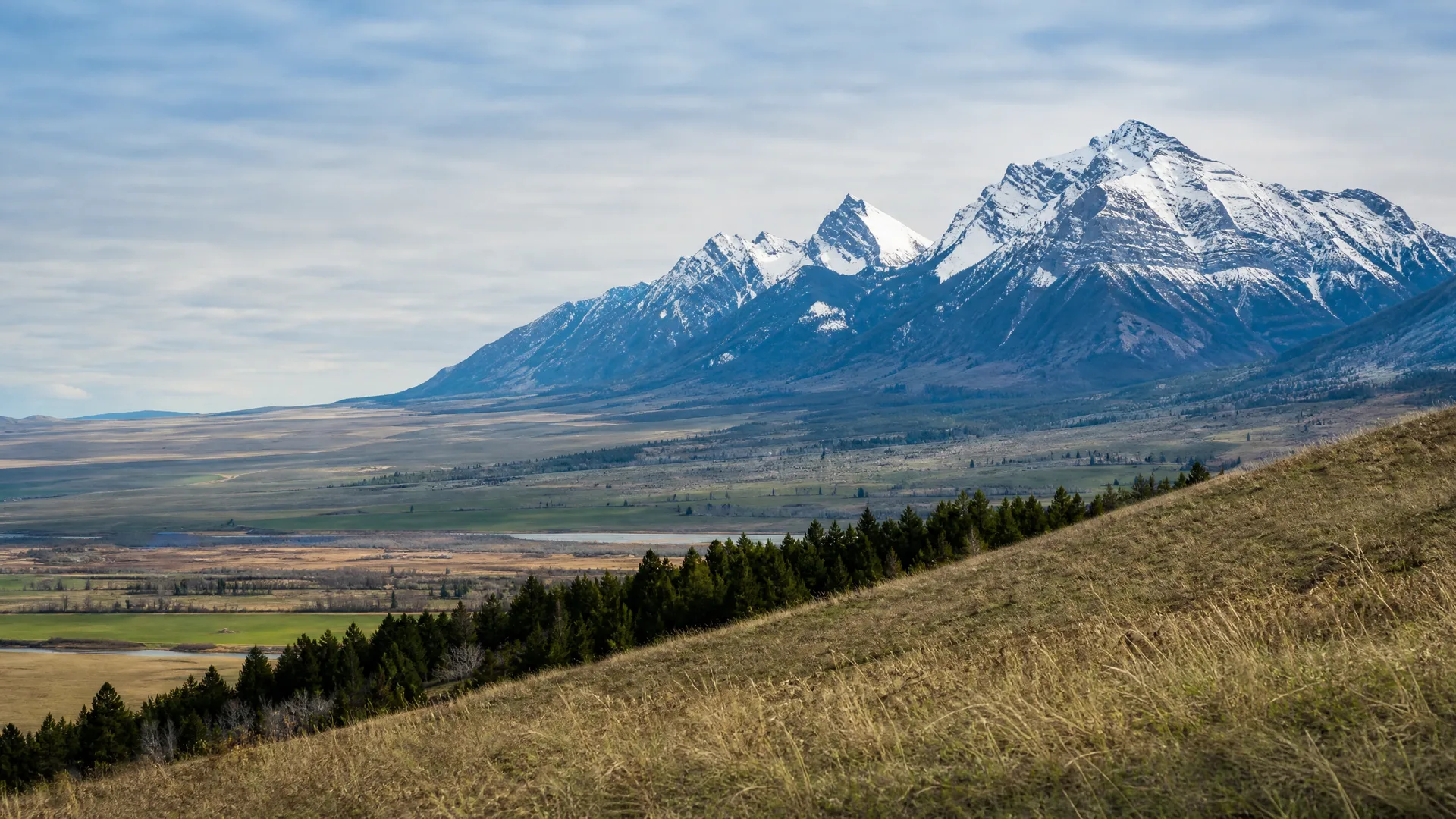
Statewide, winter nights average 15°F, per NOAA. That's the kind of cold that finds every weak spot in a boiler before morning. A system that's been short-cycling or losing pressure all fall has to work harder to keep up once nights sit that low, and it shows at home: a burner that cycles on and off more than it used to, a room that won't quite catch up, pressure you're topping off more often than last winter. A boiler in good shape handles a 15°F night without you noticing. One that's already struggling won't hide it long, because there's no mild stretch coming to give it a break.

NOAA nClimDiv 1991-2020 county normals weighted by homes

Call now or wait it out

Call someone now

  • Pressure drops below 12 psi on the gauge and you've bled the system more than once this month.
  • The pilot or igniter won't hold on the first try and you're relighting it every few days.
  • One or two rooms stay cold no matter how high you set the thermostat.
  • You hear banging or gurgling in the pipes every time the burner kicks on.
  • The boiler short-cycles, firing and shutting off every few minutes instead of running a steady stretch.

Watch it for now

  • Pressure holds steady between calls and you haven't had to add water in weeks.
  • The pilot or igniter lights clean every time, no relighting, no delay.
  • Every room reaches the temperature you set it to, including the ones farthest from the boiler.
  • The pipes run quiet, no knocking, no gurgling, even on the coldest nights.
  • It runs long, even cycles rather than firing on and off in quick bursts.
  1. Cold water enters and sediment settles at the bottom of the heat exchanger

  2. The igniter or pilot lights the burner under the heat exchanger

  3. The burner heats water moving through the exchanger under pressure

  4. A circulator pump pushes hot water out to the radiators or baseboards

Winter nights average 15°F statewide

Nights that cold mean your boiler is firing most of the dark hours just to hold the thermostat where you set it. A boiler that's already losing pressure or short-cycling doesn't get a break at 15°F, it just runs longer and harder trying to catch up.

NOAA nClimDiv 1991-2020 county normals weighted by homes

A closed silver laptop and a glazed ceramic mug on a wooden table, with a blurred kitchen counter, potted plant, cutting board and window in the background.

So does your boiler make it to April

If the pressure holds, the pilot catches every time, and every room heats the same as the next, your boiler is set up to see this winter through. If it's doing two or three of the things covered above, banging pipes, a pilot you keep relighting, a room that won't warm up, it's telling you something now so it doesn't quit on a night that's fifteen below. Either way you know where you stand, and that's the point of walking through all of this.

If yours falls in the second group, the part that's usually a hassle is finding someone who actually works on boilers, not just furnaces, and can get to your house before the next cold snap. That's calling around, explaining the same banging-pipe story to three different companies, then sitting on quotes trying to tell which one knows what they're talking about. Here that part's handled for you: one contractor, licensed and local, who sees this exact equipment every winter in this state and already knows what a Montana boiler running into trouble looks like.

A living room corner with a beige sofa and cushion, a round wooden coffee table holding a pale ceramic vase of eucalyptus stems and a wooden bowl, and a curtained window with a potted plant above a latticed radiator cover in the background.
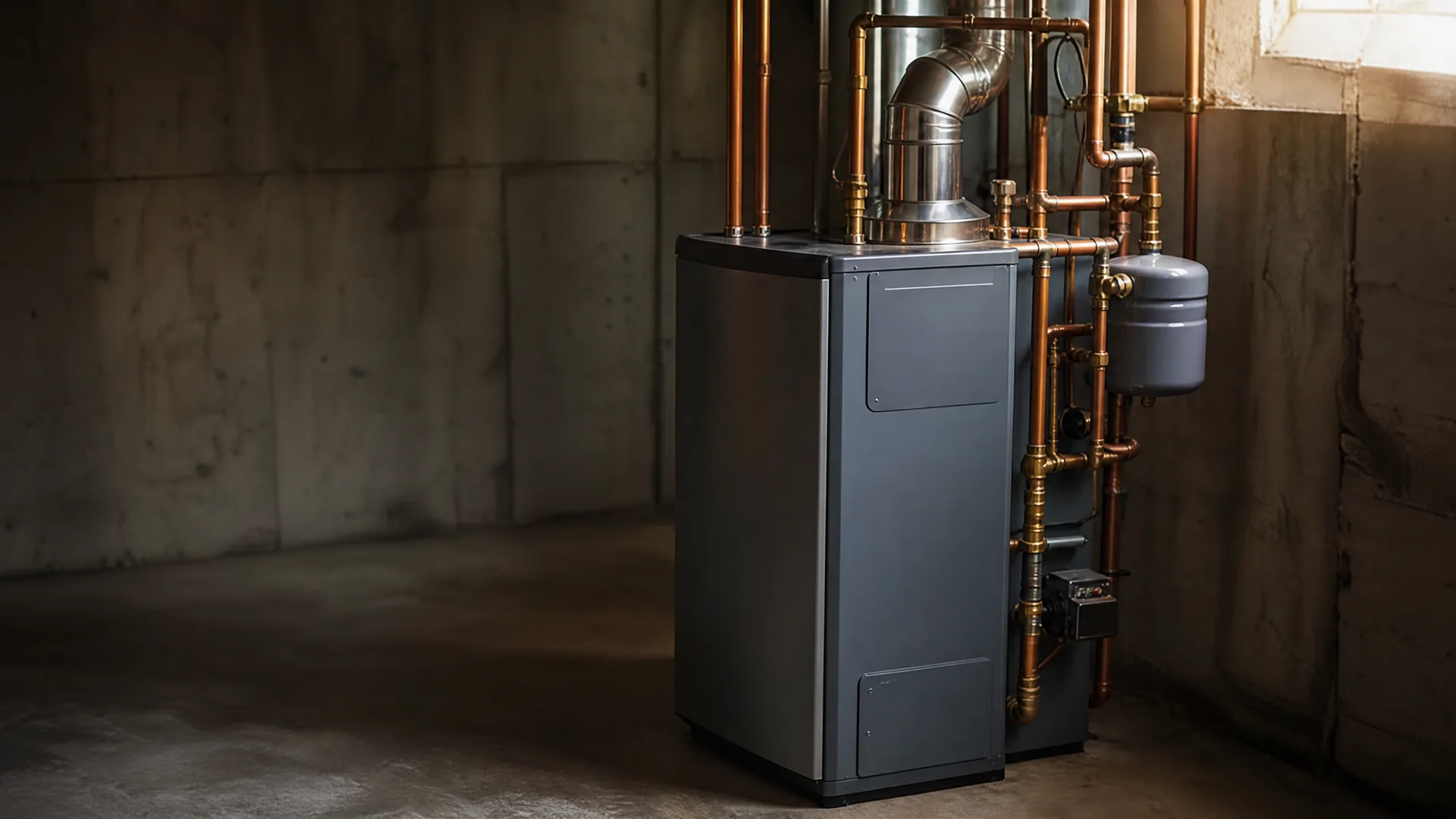
A gray boiler unit in a concrete-walled basement, connected to copper piping, a metal flue duct, and a wall-mounted expansion tank.

Explain it one time

Step 1 of 3: Equipment