Profile view of a bearded man wearing a dark green baseball cap and a dark gray T-shirt against a plain light background.

Repair or replace an old boiler in Montana

Step 1 of 3: Equipment

Should I repair my old boiler or just replace it?

Your boiler is old and something's gone wrong again, and now you're standing in the basement doing the math on whether this is worth fixing one more time. A repair might get you through this winter, but if the same unit keeps acting up, you want to know when it stops making sense to keep paying for patches on a machine that's near the end of its life.

Replace it once repairs become frequent or the boiler is old

A boiler that needs a new part every year, or one that's leaking, cracked, or struggling to hold pressure, is past the point where repair makes sense. Most boilers are built to last a couple decades, and once one gets there, parts wear out faster and replacements get harder to find. Montana winters put real demand on a heating system for months at a stretch, and gas is how most homes here keep up with it. An old boiler working harder than it should to do that job tends to cost more to keep alive than to swap out. A single repair for a newer unit is a different call than the third repair on one that's already old.

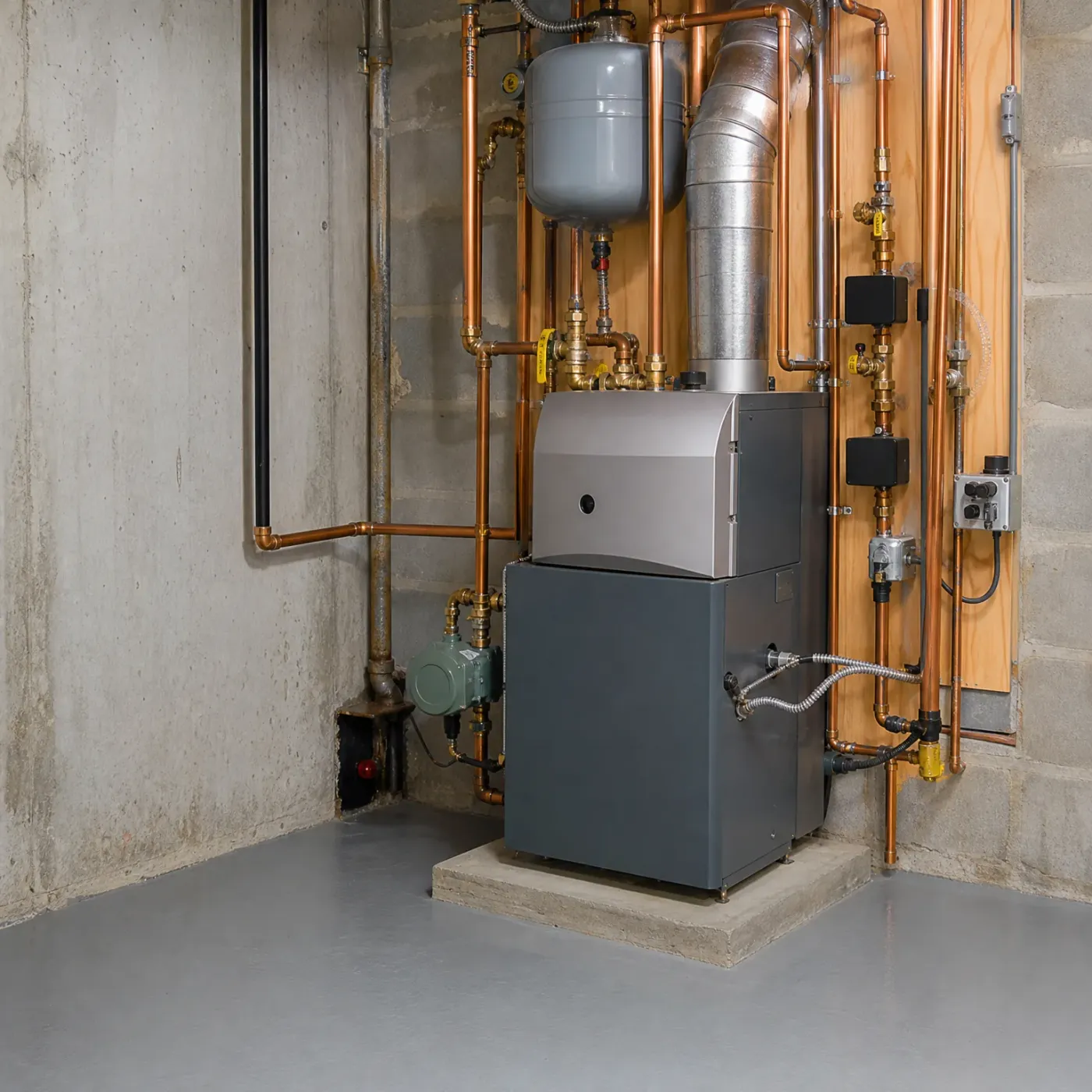
A gray residential boiler on a concrete pad in a basement corner, connected to copper piping, an expansion tank, circulator pumps and insulated flue ducting against concrete and plywood walls.

When repair still makes sense

A boiler like this, piped clean with good valves and a working expansion tank, is usually worth fixing. If the rest of the system is sound, a circulator pump or a valve replacement can keep it running for another winter without much trouble.

A teal boiler with a pressure gauge and black burner unit sits on a concrete pad in a basement corner, with copper pipes, a flue vent, and a gray expansion tank above against concrete block walls.

When it's telling you something else

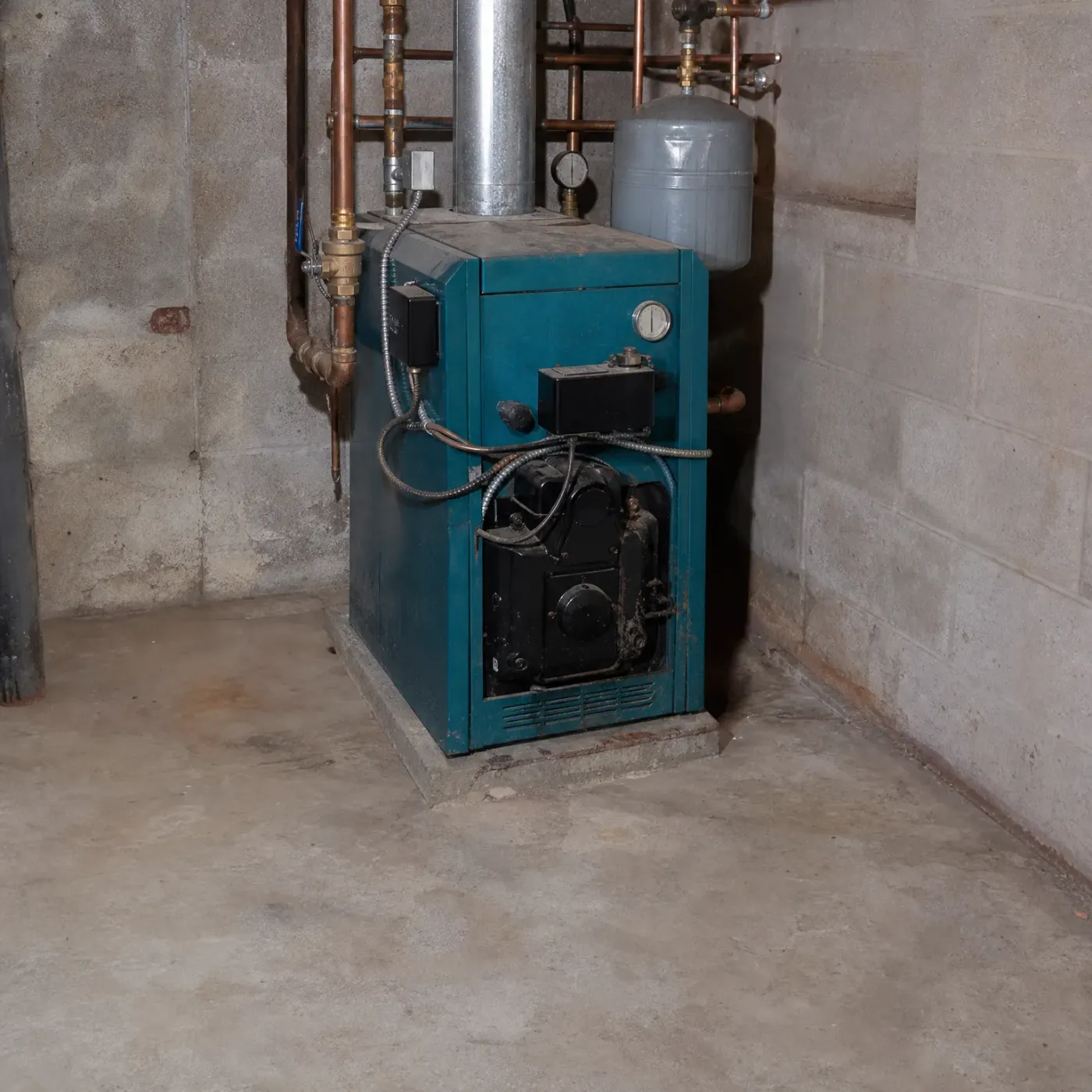
A teal-cased boiler like this one has likely been down there since before you owned the house. Corrosion on the casing and a conduit this old usually mean the inside of the unit has worn just as much as the outside you can see.

A gray-haired man in a dark sweater sits on a light gray sofa in a living room, looking toward a sunlit window with trees outside.
A gray-haired man in a dark blue sweater sits on a light gray sofa in a sunlit living room, looking off to the side, with a potted plant, shelving unit, and large glass doors behind him.
A bearded man with graying hair in a dark green sweater sits on a sofa in a living room, looking off to the side, with a sliding glass door and a dim kitchen doorway behind him.
A gray-haired man in a dark knit sweater sits on a light gray sofa in a living room, looking toward a sunlit window, with houseplants, a lamp, and framed art in the background.

A boiler's job is simple. Water heats up, moves out to the radiators or baseboard, gives up its heat, and comes back to be heated again. Most of the things that go wrong happen to specific parts along that loop, not to the boiler as a whole. The heat exchanger is the one that matters most, because once it cracks or corrodes through, there's no safe way to patch it, and a tech who finds this will shut the unit down right there rather than risk flue gases getting into the air you breathe. Other failures are smaller and separate. A waterlogged expansion tank can't absorb the water's expansion anymore, so the boiler short cycles or trips on pressure instead. Low pressure or a bad feed valve trips the low water cutoff before the burner even gets a chance to fire. And since most homes here run on natural gas, a standing pilot or igniter that won't light can shut the whole thing down without anything else being wrong at all.

How a boiler actually fails

  • A boiler heats water in a sealed loop and sends it to radiators or baseboard, then the same water returns to be heated again.
  • The heat exchanger is the part that actually fails most often, and once it's cracked or corroded through, a boiler can't be patched back to safe use.
  • A failing heat exchanger can let flue gases mix with the air in your home, which is why a tech will shut a unit down on the spot rather than patch it.
  • The expansion tank absorbs the water's expansion as it heats, and a waterlogged tank is a common reason a boiler short cycles or trips on pressure.
  • Low water pressure or a bad feed valve will trip the low water cutoff and shut the burner down before anything gets hot.
  • Montana homes on natural gas rely on a standing pilot or an igniter to start each heating cycle, and either one can fail on its own without the rest of the boiler being at fault.
A middle-aged woman with shoulder-length dark hair, wearing a gray cardigan over a cream top, sits in an upholstered armchair and looks toward a sunlit window, with a shelf holding framed pictures and a plant behind her.
A woman and a child wrapped together in a knitted gray blanket on a couch, with the child's head resting on her shoulder and a lit table lamp and houseplant in the background.

15 to 20 years

That's the span a gas boiler usually covers before parts start failing in sequence rather than one at a time. If yours is near that mark, a tech can tell you where it stands.

Get one local pro

Gas is cheap to run here

Montana gas rates make a boiler inexpensive to operate once it's working right. That math only holds if the unit itself isn't losing efficiency to age or corrosion.

Get one local pro
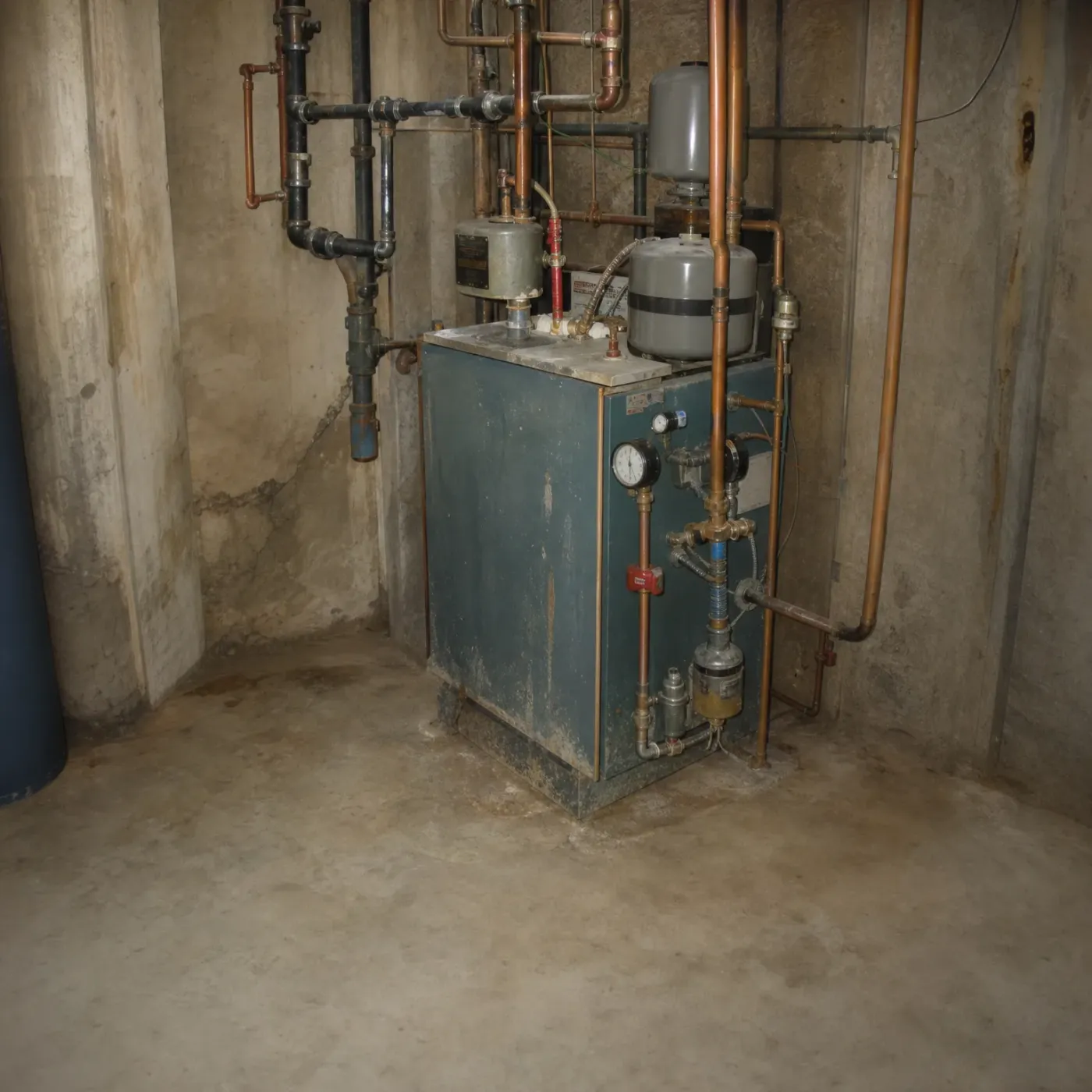
A green metal boiler with pressure gauge stands in a concrete basement corner, surrounded by copper and black iron pipes and two tank-shaped vessels.
Before you get your boiler installation
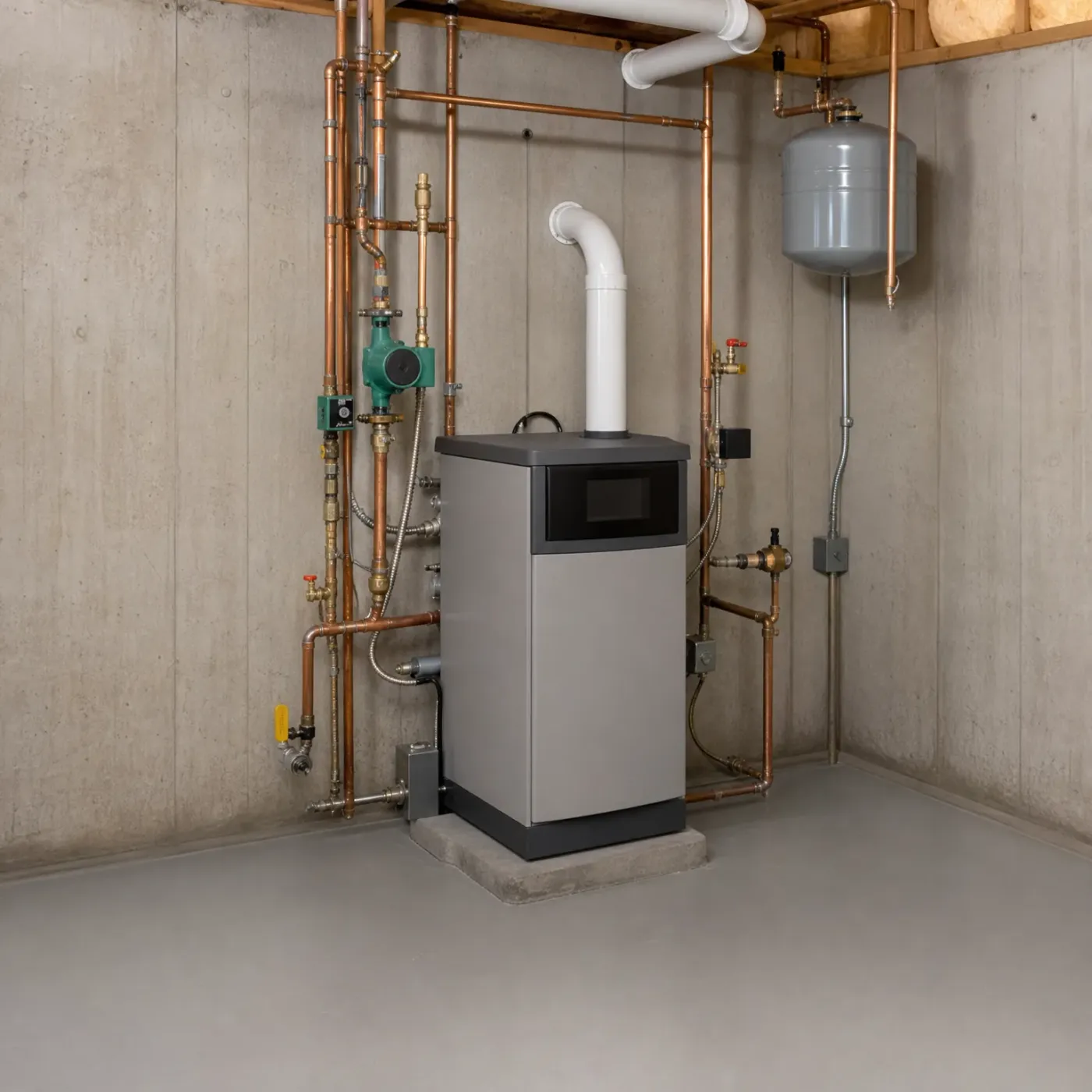
A gray floor-standing boiler on a concrete pad in a basement corner, with copper piping, a circulator pump, a white PVC flue, and a gray expansion tank mounted on the wall.
After you get your boiler installation

Get your boiler to the right pro

Only one pro gets your request, so you hear from one company.

You only hire the pro if you want to.

Every winter you keep this boiler running is another winter it can fail on the coldest night you have, not a mild one, because that's when a tired heat exchanger or a stuck valve finally gives out.

A new boiler sized right for your house won't do that math against you. It heats on the first cold night the same as the hundredth, and gas here is cheap enough that running it costs you little either way.

Winter nights average 15°F statewide

15°F is the average overnight low here in December, January and February, and that's what your boiler is built to answer for, night after night, for three straight months. An old unit that's slow to recover or short-cycling at those temperatures is working against the coldest stretch of your year, not a mild one.

NOAA nClimDiv 1991-2020 county normals weighted by homes

Repair or replace, the honest version

  • If the boiler is sound and the failure is one part, a repair can carry you through another Montana winter.
  • Past 15 to 20 years, or with the heat exchanger cracked, replacement is the honest answer, not another patch.
  • A boiler sized right for your house keeps even a 15°F night from turning into a cold morning and a service call.
  • A local contractor who works on these units all season knows which part tends to go first on a boiler this age.
  • You're matched with one licensed contractor in Montana, so you're not fielding calls from several companies about the same job.
  • Either way, the decision comes down to what's actually wrong with your boiler, not just its age.

A boiler that's otherwise sound, with good valves and a clean piping setup, is usually worth one more repair. Swap the circulator pump or the failed valve and you've likely got another Montana winter in it. Once you're past 15 to 20 years, or the heat exchanger itself has cracked, you're not fixing the boiler anymore, you're just delaying the replacement by a few months. That's the math this comes down to, and it's specific to your unit, not its age alone.

What replacement gets you is a boiler sized for your house, one that can answer a 15°F night without short-cycling or falling behind. That matters here because gas is cheap in Montana and most homes already heat with it, so a properly sized unit isn't an added cost, it's the thing that keeps your gas bill where it should be instead of climbing every time the old boiler struggles to keep up.

Either way, you want someone who sees this equipment every week in winter, not once a year. A contractor working on boilers all season in Montana knows what tends to fail first on a unit your age, and can tell you straight whether you're looking at a repair or a replacement. When you request a match, you're connected with one licensed contractor local to you, not a handful of companies competing for the job. That's one person who knows your equipment, looking at your actual boiler before anyone tells you which way to go.

Kitchen corner with cream upper cabinets, oak lower cabinets, white marble-look countertop, beige tile backsplash, a ceramic vase of greenery, a wooden cutting board and bowl, and a black-framed window at right.
Interior corner of a room with a white-framed window and wide sill, beige walls with panel molding, a wooden cabinet holding a ceramic vase with a green leafy plant, and blurred shrubs and trees outside.
A wood-framed armchair with beige cushions and a woven lumbar pillow sits in a corner beside a large window overlooking green trees, with a tall ceramic vase holding leafy branches on the left and plaster walls and wood flooring.
Interior corner with a white-framed window above a sill, beige walls with baseboard molding, a greige shaker-style cabinet with brass knobs and a potted plant on top, light wood flooring and a woven jute rug.
A dark-framed six-pane window with white trim and sill set in gray horizontal lap siding, with hydrangea shrubs below and a white column and shingled roof section at left.

The right pro for this job

Your request stays with one local pro.

Get a local pro

Asking costs nothing, and the choice to hire stays yours.