Tell us about the job
Takes about a minute. No obligation.
Sizing a boiler for this house is not a generic calculation. Homes in Richland County, MT run heat about nine months a year, from September through May. The burner, heat exchanger, and ignition system cycle through that entire stretch, and wear on those parts accumulates against real months of runtime, not a theoretical load. A contractor quoting a replacement here has to establish what the existing system was actually asked to carry before they can specify what goes in its place. A unit undersized for this house will run longer cycles, overstress the heat exchanger, and show fatigue well ahead of its rated service life.
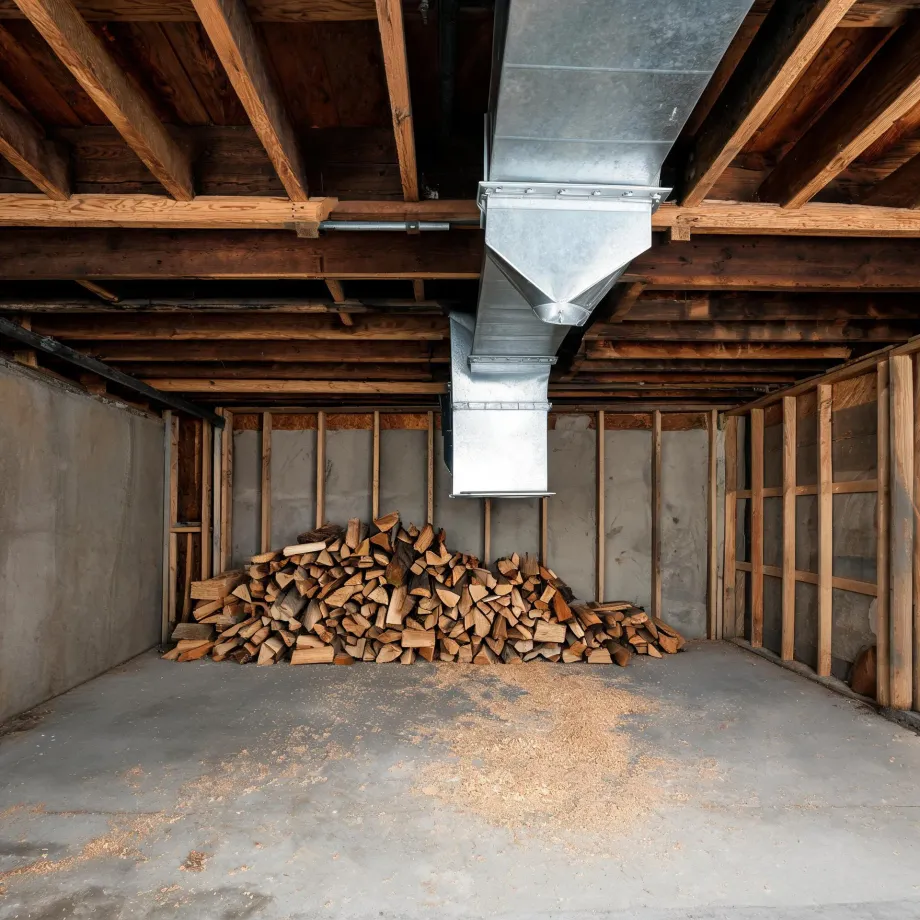
Older ductwork is not neutral territory for a new boiler. What a contractor finds behind the walls decides how the installation actually goes: whether existing runs can carry the new distribution load, and whether the plumbing and electrical already in the house line up with what the new unit needs. Half the homes in Richland County, Montana were built in 1980 or earlier (2020-2024 ACS 5-year). That means a good portion of the housing a contractor works in was built for equipment that has since been replaced at least once, leaving layouts that suited something else. A contractor sizing a boiler for one of these houses measures what is there before committing to a configuration.
What Gets Installed With a New Boiler
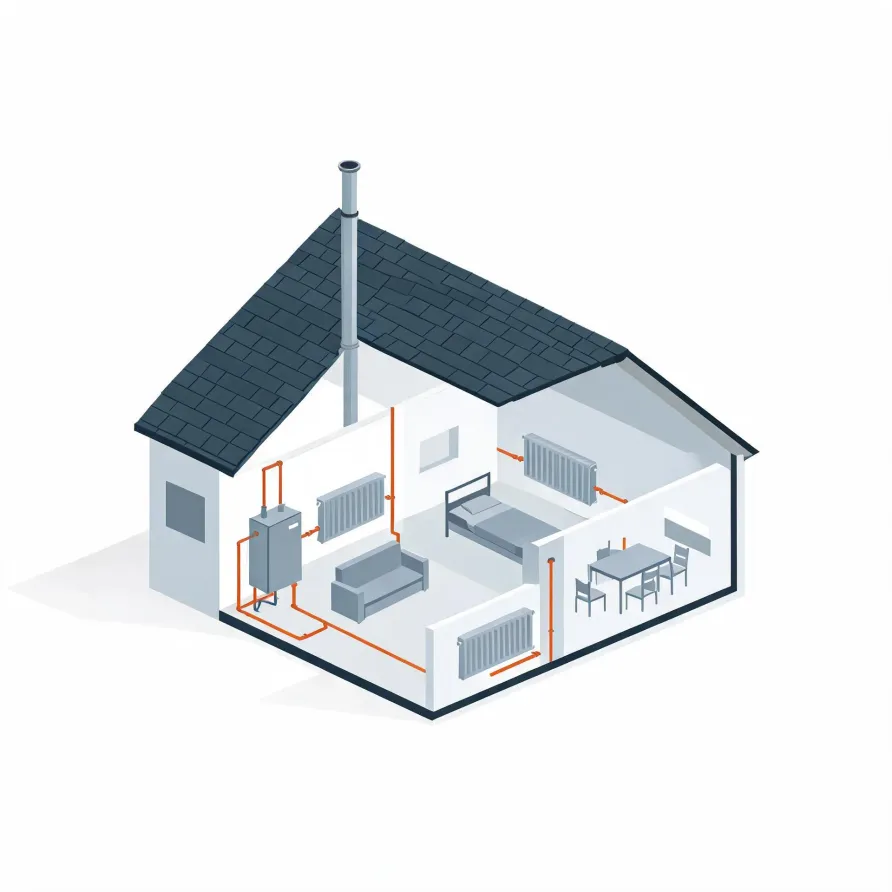
The boiler itself sits in a mechanical room, basement, or utility closet and is the unit that heats water for the whole system. Wall-mounted or floor-standing, it is the piece the contractor sizes and positions first. From it, supply lines carry hot water out to the rest of the house.
Radiators or radiant floor loops are the delivery points, placed in individual rooms to release heat where it is needed. A circulation pump moves water through the loop, and an expansion tank sits close to the boiler to absorb pressure changes in the system as water heats and cools.
The drawing shows a typical layout, and a licensed contractor determines what the configuration looks like for this specific house.
Find a contractor in Richland CountyRichland County, by the numbers
163 severe weather events were recorded in Richland County, Montana between 2015 and 2024.
NOAA National Centers for Environmental Information, Storm Events Database, bulk CSV export, events 2015-01-01 through 2024-12-31.Half the homes in Richland County, Montana were built in 1980 or earlier (2020-2024 ACS 5-year).
U.S. Census Bureau, 2020-2024 American Community Survey 5-Year EstimatesRichland County, Montana holds 5,610 housing units (2020-2024 ACS 5-year).
U.S. Census Bureau, 2020-2024 American Community Survey 5-Year EstimatesOwners occupy 67.1% of the occupied homes in Richland County, Montana (2020-2024 ACS 5-year).
U.S. Census Bureau, 2020-2024 American Community Survey 5-Year EstimatesBoiler Installation Rules for Richland County, Montana2 codes, standards & licensing rules
Licensing and Legal Requirements in Richland County, Montana
Montana’s contractor licence does not reach a casual, minor or inconsequential job whose total price for labour, materials and everything else is less than $2,500 — and the exemption is lost if the work is only part of a larger operation, or if a job is divided up to get under the figure.
Montana requires a current construction contractor licence from the Department of Labor and Industry: an individual or business may not engage in business as a construction contractor without one.
Severe Weather Events in Richland County
Richland County's climate puts real demands on heating equipment, and those demands vary by how hard the weather hits in a given year. A boiler sized and installed for local conditions holds up better than one spec'd for somewhere else.
163 severe weather events, 2015–2024. Source: NOAA National Centers for Environmental Information, Storm Events Database.